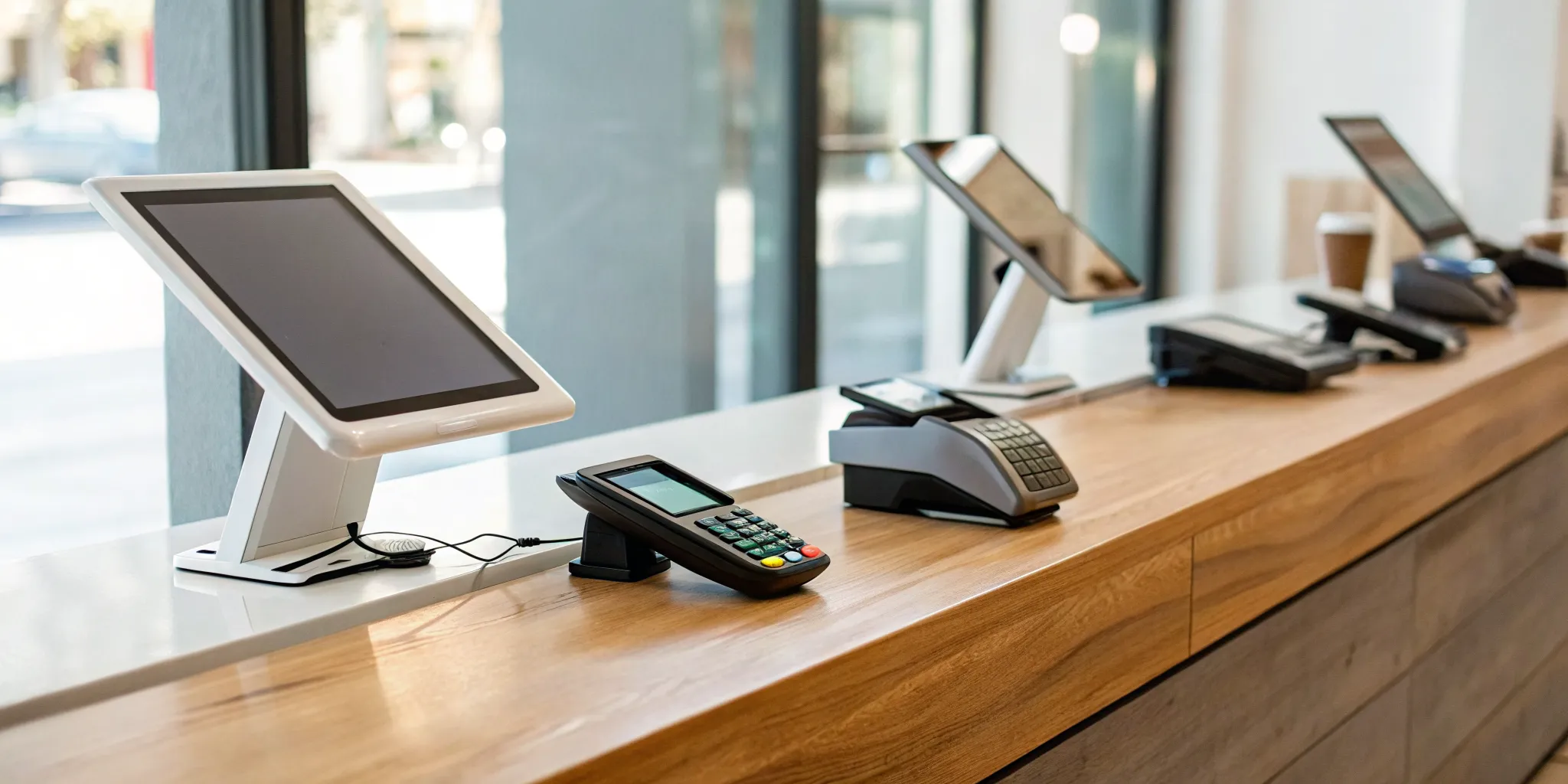
For many business owners, credit card processing fees feel like an unavoidable tax on their revenue. You make a sale, and a percentage of it immediately disappears before it ever hits your bank account. But it doesn’t have to be that way. With the right strategy and the right partner, you can take control of these costs and protect your profit margins. It all starts with understanding how providers charge for their services and knowing which models offer the most savings. This guide will show you how to look past the flashy marketing and analyze what really matters, including how programs like cash discounts can nearly eliminate your fees. Let’s find the best merchant services for small business that put money back in your pocket.
Key Takeaways
- Look beyond the brand name: The best service for you depends entirely on your business type and sales volume, so compare providers based on your specific needs, not just on popularity or what other businesses use.
- Understand pricing to protect your profit: Don’t let confusing fees eat into your revenue. Learn the difference between flat-rate, interchange-plus, and cash discount programs to choose the most cost-effective structure for your business.
- Consider the complete package: A great rate is only part of the equation. Make sure your provider offers fast funding, seamless integrations with your existing software, and reliable customer support to keep your business running smoothly.
Which Merchant Service Is Best for Your Small Business?
Picking the right merchant service can feel like a huge decision, and honestly, it is. The “best” one really comes down to what your specific business needs. Your business type, how many sales you make each month, and whether you sell in-person, online, or a mix of both all play a big role in finding the right partner for payment processing. What works for a brand-new coffee cart might not be the best fit for an established online boutique with high sales volume.
To help you sort through your choices, it’s helpful to know the key players and what they’re known for. There are several top contenders in the industry, and each one has its own strengths. For example, Square is often a starting point for new or low-volume businesses because of its simple setup and flat-rate pricing. Stripe is a favorite among online businesses that need powerful, flexible e-commerce tools. Meanwhile, providers like Helcim focus on transparent, low-cost pricing, which is great for businesses watching every penny.
Others, like Clover, are a go-to for restaurants and retail shops that need a complete point-of-sale hardware and software system. And then there are providers like us at MBNCard. We specialize in creating affordable, customized solutions with a big focus on personal support and programs like cash discounts that can completely eliminate your processing fees. In the sections ahead, we’ll get into the details of what to look for and compare these options side-by-side to help you find the perfect fit.
What Should You Look for in a Merchant Service?
Choosing a merchant service provider feels like a huge decision, but it doesn’t have to be overwhelming. When you know what to look for, you can confidently pick a partner that fits your business perfectly. Think of it as building a checklist. The right provider will tick all these boxes, helping you save money, operate smoothly, and keep your customers happy. Let’s walk through the six key things you should focus on during your search.
Find a Provider with Transparent Pricing
The last thing you need is a surprise on your monthly statement. That’s why transparent pricing is at the top of the list. You should be able to easily understand what you’re paying for and why. Some providers offer flat-rate pricing, which is simple but can be more expensive. Others use an interchange-plus model, which is often more affordable but has more moving parts. A great provider will walk you through their pricing models and help you find the most cost-effective fit. Don’t be afraid to ask for a detailed breakdown of all potential fees so you can make a true apples-to-apples comparison.
Accept Payments In-Store, Online, and On the Go
Your customers expect to pay how they want, where they want. Your payment processor should make that possible. Whether you run a brick-and-mortar shop, an e-commerce site, or a mobile service, you need a provider that offers flexible solutions. Look for a partner that equips you with the tools to accept payments in-store with a modern POS system, online through a secure gateway, and on the go with a mobile card reader. This omnichannel approach ensures you never miss a sale and provides a seamless experience for your customers, no matter how they shop with you.
Make Sure It Integrates with Your POS and E-commerce Platform
Technology should make your life easier, not more complicated. Before you commit to a merchant service, confirm that it integrates smoothly with the tools you already use to run your business. This includes your point-of-sale (POS) system, your e-commerce platform like Shopify or WooCommerce, and your accounting software. A seamless POS integration saves you from manual data entry, reduces the risk of errors, and keeps your sales and inventory information perfectly in sync. It’s a small detail that makes a huge difference in your day-to-day operations.
Check for Flexible Contracts and Fast Funding
Two things that can really impact a small business are long-term contracts and slow cash flow. Look for a provider that offers month-to-month agreements. This gives you the freedom to switch if your needs change, without facing hefty early termination fees. Just as important is how quickly you get your money. Some processors can take several days to deposit funds, but many now offer next-day or even same-day funding. Getting your money faster is essential for managing cash flow and gives you the financial agility to run your business effectively.
Prioritize Security, Compliance, and Fraud Protection
Protecting your customers’ payment data is non-negotiable. Your merchant service provider is your first line of defense. They should ensure every transaction is secure and that your business meets all PCI compliance standards, which are the industry rules for handling card information. Beyond that, a good partner will offer advanced fraud protection tools to help you identify and block suspicious transactions. This not only protects your revenue but also builds trust with your customers, assuring them that their sensitive information is safe with you. It’s a critical piece of the puzzle that you can’t afford to overlook.
Choose a Partner That Offers Great Support and Can Grow with You
When your payment system goes down, you need help immediately. Look for a provider that offers reliable, 24/7 customer support. You want to know that a real person is available to help you troubleshoot, whether it’s a weekday afternoon or the middle of a busy Saturday. Beyond daily support, think about your long-term goals. Your business is going to grow, and your payment processor should be able to grow with you. A true business partner will offer scalable solutions that can handle increasing transaction volumes and support you as you expand into new sales channels.
Breaking Down Merchant Service Pricing Models
Understanding how you’ll be charged is the single most important step in choosing a merchant service provider. The pricing model determines what you pay for every single transaction, and it’s often where confusing terms and hidden fees can pop up. Getting this right from the start will save you headaches and protect your profit margins. Let’s walk through the most common pricing structures so you can feel confident when you review your options.
Flat-Rate Pricing
Flat-rate pricing is the simplest model to understand. You pay a single, fixed percentage (and sometimes a small, flat fee) for every transaction, regardless of the card type used. This makes your monthly costs predictable and easy to forecast. Because of its simplicity, this model is a popular choice for new businesses, startups, or anyone with a lower monthly sales volume. As NerdWallet explains, providers like Square offer simple flat-rate pricing and quick setup, making it a great starting point for many new entrepreneurs. The trade-off for this simplicity is that you might pay a higher rate overall compared to other models, especially as your business grows.
Interchange-Plus Pricing
This model, also known as cost-plus pricing, is considered the most transparent. It works by passing the direct wholesale cost of processing a transaction (the “interchange” fee charged by card networks like Visa and Mastercard) directly to you. Your provider then adds their markup, which is a small, fixed percentage and/or a per-transaction fee (the “plus”). Other business owners often recommend this model; on platforms like Reddit, you’ll see advice to “[c]onsider ‘Interchange Plus Pricing’](https://www.reddit.com/r/smallbusiness/comments/1ccgcxu/the_best_credit_card_processor_for_a_small/)’ because it shows all costs clearly. This transparency makes it easier to see exactly what you’re paying for and is often the lowest-cost option for established businesses with consistent sales.
Subscription-Based Pricing
Think of this model like a membership. You pay a fixed monthly subscription fee to your provider, and in return, you get access to the direct wholesale interchange rates with a very small, fixed fee per transaction. This structure is designed for high-volume businesses. If you process a lot of sales each month, the subscription fee can be significantly less than what you would have paid in percentage-based markups. For example, as Wise points out, some providers use a subscription model where the cost per transaction gets cheaper as your sales grow. This can be a fantastic way to save money, but it only makes sense once your sales volume is high enough to justify the monthly fee.
Cash Discount and Dual Pricing Programs
What if you could nearly eliminate your processing fees altogether? That’s the goal of cash discount and dual pricing programs. These models give your customers a choice: pay a slightly higher price with a card to cover the processing fees, or get a discount by paying with cash. This approach is becoming very popular because it shifts the cost of card acceptance to the customers who choose that convenience. Some services let you pass the credit card processing fee directly to the customer, which is legal in most states as long as you disclose it clearly at the point of sale. These programs are a core part of what we offer because they provide incredible savings for business owners.
Watch Out for These Hidden Fees
No matter which pricing model you choose, you have to read the fine print. A great rate can be quickly undone by a long list of unexpected charges. Some providers are notorious for adding junk fees that were never discussed during the sales process. You should always be careful of hidden fees. When reviewing a contract, specifically check for monthly fees, setup costs, early termination or cancellation fees, and extra charges for features, hardware, or customer support. A trustworthy partner will be upfront about all potential costs and will take the time to answer your questions. Don’t be afraid to ask for a complete fee schedule in writing.
Top Merchant Service Providers: A Side-by-Side Look
Choosing a merchant service provider is a big decision, but it doesn’t have to be overwhelming. To make it easier, I’ve broken down some of the top players in the industry. Each one has its own strengths, so the “best” choice really depends on your business’s specific needs, sales volume, and goals. Think about what matters most to you, whether it’s the lowest possible cost, specific software features, or having a dedicated support team you can call. Let’s look at how they stack up.
1. MBNCard
We built MBNCard for small and mid-sized business owners who are tired of confusing statements and hidden fees. Our main goal is to provide transparent, affordable payment processing with personalized support. We specialize in programs like our cash discount and dual pricing options, which can help you significantly reduce or even eliminate your processing fees. Unlike one-size-fits-all providers, we work with you to find the right solution, whether you need a simple mobile reader, a full-scale POS system, or an e-commerce integration. With fast funding and a dedicated team, we’re here to be a long-term partner in your growth.
2. Square
Square is a popular choice, especially for new or low-volume businesses, because it’s incredibly easy to set up. They’re known for their simple, flat-rate pricing and free point-of-sale software that runs on a tablet or smartphone. For in-person transactions, you’ll pay 2.6% + $0.15, while online payments are 3.3% + $0.30. This predictable model is great when you’re starting out. Square also includes a free online store with all its plans, making it a solid all-in-one package for getting a small business off the ground quickly without a lot of upfront investment.
3. Helcim
If you’re looking for transparency and low costs, Helcim is a strong contender. They use an interchange-plus pricing model, which is often the most affordable option for businesses as they grow. There are no monthly fees or long-term contracts, giving you a lot of flexibility. Their rates are 0.4% + $0.08 (plus interchange) for in-person sales and 0.5% + $0.25 (plus interchange) for online sales. Helcim also offers its own free POS software and even gives automatic rate discounts to businesses that process higher volumes, rewarding you as your sales increase.
4. Stripe
Stripe is the gold standard for online and e-commerce businesses, particularly those with a tech-savvy side. It’s built with developers in mind, offering powerful and customizable tools (APIs) to create unique checkout experiences. Their standard pricing is 2.9% + $0.30 for online transactions. While they do offer hardware for in-person payments, their real strength lies in the digital world. If your business operates primarily online, sells subscriptions, or has international customers, Stripe’s robust platform is designed to handle that complexity with ease, supporting payments in over 135 currencies.
5. Chase Payment Solutions
For business owners who like to keep things consolidated, Chase Payment Solutions offers an appealing all-in-one system. If you already bank with Chase, you can manage your payment processing, banking, and business reports from a single login. Their rates are competitive, at 2.6% + 10 cents for most in-person card payments and 2.9% + 25 cents for online orders. The main advantage here is convenience and integration. Having your deposits, fees, and financial reporting all under one roof can simplify your bookkeeping and give you a clearer picture of your cash flow.
6. Clover
Clover is best known for its sleek and comprehensive point-of-sale (POS) hardware, making it a go-to for retail stores and restaurants. They offer a wide range of devices, from simple handheld units to full-fledged countertop systems with cash drawers and receipt printers. The software is designed with industry-specific features, like table management for restaurants or inventory tracking for shops. While you can purchase Clover hardware and use it with other processors (like us at MBNCard), many businesses opt for an all-in-one Clover plan for a seamless hardware and software experience right out of the box.
A Closer Look: The Pros and Cons of Each Provider
Choosing a merchant service provider is a big decision, so let’s break down what each of these top contenders brings to the table. We’ll look at the good, the bad, and who they’re ultimately best for.
MBNCard
As a dedicated payment solutions provider, our entire focus is on helping small and mid-sized businesses succeed. We built our model around transparency and partnership. The biggest pro of working with us is that you get a team committed to finding the right fit for your specific needs, not just selling you a generic package. We specialize in programs like cash discount and dual pricing that can significantly reduce or even eliminate your processing fees. You get straightforward pricing, fast funding, and real human support when you need it.
The flip side is that we aren’t a DIY, plug-and-play platform. We believe payment processing isn’t one-size-fits-all, so we take a more hands-on approach. If you’re looking for a partner to help you optimize your costs, that’s where we shine.
Square
Square is often the first name that comes to mind for new businesses, and for good reason. Its major advantage is simplicity. With predictable flat-rate pricing and free point-of-sale software, it’s incredibly easy to get started without a big upfront investment. You can set up a free online store and accept payments right away, all without being locked into a long-term contract. This makes it a fantastic choice if you’re just starting out or have a low sales volume.
However, that simplicity comes at a cost as your business grows. Square’s transaction fees, while straightforward, can become more expensive than other models for businesses processing a higher volume of sales. For example, industry analysis shows that as your revenue increases, those flat fees can take a bigger bite out of your profits compared to other pricing structures.
Helcim
Helcim is a favorite among business owners who want to pay the lowest possible rates. It operates on an interchange-plus pricing model, which is widely considered the most transparent and cost-effective method available. With this model, you pay the direct wholesale cost of the transaction (the interchange fee) plus a small, fixed markup from Helcim. There are no monthly fees or cancellation penalties, which gives you a lot of flexibility.
The main challenge with Helcim is that the interchange fees themselves are variable. They change depending on the type of card your customer uses (a debit card, a corporate rewards card, etc.). While you’re getting a great deal on the markup, it can be a little harder to predict your exact processing costs from one month to the next.
Stripe
If your business lives primarily online, Stripe is a powerhouse. It was built from the ground up for e-commerce and is known for its incredibly flexible and developer-friendly tools. Stripe’s API allows for deep customization, letting you build the exact payment experience you want on your website or app. This makes it the go-to choice for many startups, software-as-a-service (SaaS) companies, and online-first retailers who need robust, scalable payment processing.
On the other hand, Stripe isn’t always the best fit for businesses with a strong brick-and-mortar presence. While it does offer hardware for in-person payments, its transaction fees for those sales are typically higher and may not be as competitive as other providers who specialize in retail.
Chase Payment Solutions
For business owners who already bank with Chase, their payment solutions offer a compelling all-in-one package. The main benefit is convenience. You can manage your business checking, credit cards, and payment processing all under one roof, which can simplify your financial operations. They provide a full suite of services and multiple ways to accept payments, from in-store terminals to online checkouts, giving you a single point of contact for your most important financial tools.
The downside is that this convenience might come with higher costs. Chase’s transaction fees for both in-person and online sales are often not the lowest on the market. While the integration is seamless, you should compare their rates to other providers to make sure you aren’t overpaying for the convenience of keeping everything with one institution.
Clover
Clover is designed specifically for the hustle and bustle of retail stores and restaurants. Its strength lies in its comprehensive POS hardware and software systems. From sleek countertop terminals to handheld devices for tableside ordering, Clover offers physical tools that are tailored to the daily operations of a brick-and-mortar business. The software includes features for inventory management, employee scheduling, and customer loyalty programs, making it a true command center for your storefront.
The potential drawback with Clover is its pricing and package structure. Because it’s an all-in-one hardware and software solution, you often have to buy into a specific plan. This can sometimes feel complex, and you might find yourself paying for a bundle of features when you only need a few. It’s important to carefully review their plans to ensure you’re not locked into a system that’s more powerful, or more expensive, than what your business actually requires.
Finding the Right Fit for Your Business
Choosing a merchant service isn’t a one-size-fits-all decision. The best provider for a bustling restaurant will have different features than the ideal one for an online-only clothing boutique. The key is to match the provider’s strengths with your business’s specific needs. Are you focused on keeping costs as low as possible? Do you need robust hardware for a physical storefront? Or is a streamlined online checkout your top priority? Let’s break down which services tend to work best for different types of businesses so you can find your perfect match.
For Businesses That Prioritize Low, Transparent Costs
If your primary goal is to find the most affordable processing with no hidden surprises, you’ll want to look for a provider that offers interchange-plus pricing. This model is known for its transparency and is often the most cost-effective option. A great example is Helcim, which provides interchange-plus pricing without locking you into a monthly fee or a long-term contract. This approach is perfect for business owners who want to understand exactly where their money is going and keep their overhead low without sacrificing service quality. It’s a straightforward way to manage your payment processing expenses.
For Retail Shops and Restaurants
Physical storefronts like retail shops and restaurants need a system that’s fast, reliable, and easy for staff to use. Square is a popular choice because it offers simple flat-rate pricing and free point-of-sale (POS) software, making it incredibly easy to get started, especially for new or lower-volume businesses. For those needing more advanced features, Clover offers comprehensive POS hardware and software designed to handle the complexities of a busy storefront. Both options give you the tools to manage sales, inventory, and customer interactions right at the counter.
For High-Volume and E-commerce Businesses
When you’re processing a high volume of transactions, every fraction of a percent in fees adds up. Dharma Merchant Services caters to this need by offering specialized, low-cost pricing for established, low-risk businesses. For online-first companies, Stripe is a powerhouse. It provides highly customizable APIs and a suite of powerful tools built for internet commerce, making it a favorite among startups and developers who want to create a seamless, integrated checkout experience. These providers are built to scale with your growing sales.
For Service-Based or Health and Wellness Businesses
If you run a service-based business, like a consulting firm, a salon, or a yoga studio, you need a flexible way to accept payments anywhere. Square is often a go-to in this space because of its simplicity and predictable costs. You can easily send invoices or use a simple card reader with your phone or tablet. With a typical fee of around 3% per transaction, it’s easy to factor processing costs into your pricing. This straightforward approach, as noted in a Reddit discussion, removes the complexity so you can focus on serving your clients.
For Businesses That Want All-in-One Banking and Payments
Do you love the idea of simplifying your financial life? Some providers let you handle your banking and payment processing in one place. Chase Payment Solutions is a prime example, as it can act as both your payment processor and the bank holding your merchant account. This creates a truly all-in-one solution where you can manage payments, view business reports, and even handle payroll with a single login. For business owners who value convenience and want a consolidated view of their finances, combining banking and merchant services can be a game-changer.
Don’t Pay Full Price: How to Find Discounts and Deals
When you’re shopping for a merchant service provider, the price you see on the website isn’t always the final word. Think of it like any other major business expense: there are almost always ways to find savings if you know where to look. Before you sign any contracts, it’s worth taking a little time to explore a few strategies that can lower your monthly processing bill and cut down on initial setup costs. From special promotions to different pricing structures, a bit of research can make a big difference to your bottom line. It’s all about understanding your options and finding a partner who is willing to work with your business’s needs.
Look for Welcome Bonuses and Promo Codes
Many providers use attractive welcome bonuses and promo codes to attract new merchants. You’ll often find these deals right on their homepage, offering things like a discount on a new POS terminal or waived fees for your first few months. Grabbing one of these introductory offers is a super simple way to save on your initial setup costs, which frees up a little extra cash flow when you’re just getting started. Before you commit to a provider, make it a habit to look for a “promotions” or “special offers” page on their site. You might be surprised by what you find.
Ask About Volume Discounts
If your business processes a high volume of sales each month, you should absolutely ask about volume discounts. Some processors automatically lower your rates once you hit a certain sales threshold, which is a fantastic perk for growing businesses. For example, you might find that your per-transaction fee drops after you process over $50,000 in a month. This means your processing costs can actually go down as your sales go up. Don’t be shy about bringing this up during sales conversations. If you have the transaction volume, you have the leverage to negotiate for better merchant services.
Consider a Cash Discount Program to Eliminate Fees
One of the most powerful ways to reduce your costs is by implementing a cash discount program. In this model, you offer your customers a small discount for paying with cash. Customers who prefer the convenience of paying with a card simply pay the listed price, which includes the processing fee. This approach is legal in most states as long as you’re transparent about it with clear signage at the entrance and the point of sale. It’s a straightforward strategy that can help you offset, or even eliminate, your credit card processing fees entirely. Just make sure to check your local state regulations before you get started.
Related Articles
- 6 Best Online Merchant Services for Small Business
- How to Accept Credit Cards for Small Business in 4 Steps
- 10 Cheap Online Payment Processors for Small Business
Frequently Asked Questions
I’m just starting my business. Is flat-rate pricing my only option? Not at all. While flat-rate pricing from providers like Square is popular for new businesses because of its simplicity, it’s not your only choice. An interchange-plus model can often be more affordable, even for businesses with lower sales volumes. A good provider will take the time to review your expected sales and transaction types to help you figure out which model will actually save you the most money from day one. Don’t assume simple is always cheapest; it’s worth having a conversation to compare your options.
What’s the real difference between a cash discount and a credit card surcharge? This is a great question because the two are often confused. A cash discount program involves offering a lower price to customers who pay with cash. The listed price in your store is the card price, and cash payers get a discount at the register. A surcharge, on the other hand, is when you add a fee at the checkout for customers who choose to pay with a credit card. While both can help offset processing fees, cash discount programs are legal in all 50 states and are often perceived more positively by customers.
Am I stuck if I sign a contract with a provider I don’t like? This is a major concern, and it’s why you should always prioritize providers who offer month-to-month agreements. Many processors try to lock you into long-term contracts (sometimes for three years or more) with steep early termination fees. Before you sign anything, ask directly about the contract length and cancellation policy. A true partner is confident they can earn your business every month and won’t need to trap you with a restrictive contract.
What exactly is PCI compliance, and is it something I need to handle myself? PCI compliance refers to the industry security standards for handling credit card information safely. Protecting your customers’ data is your responsibility, but a good merchant service provider is your partner in this. They should provide you with secure technology (like compliant terminals and payment gateways) and guide you through the process of validating your compliance, which often involves completing an annual questionnaire. You don’t have to become a security expert, but you do need to work with a provider who takes it seriously.
Can I use my existing POS system with a new merchant service provider? In many cases, yes. This is a critical question to ask when you’re shopping around. If you already have a point-of-sale system you love, like Clover or another brand, you’ll want to find a processor that can integrate with it smoothly. This prevents you from having to buy new hardware or retrain your entire staff. A flexible provider will work to connect with your existing tools, making the switch seamless and saving you from unnecessary expenses and operational headaches.