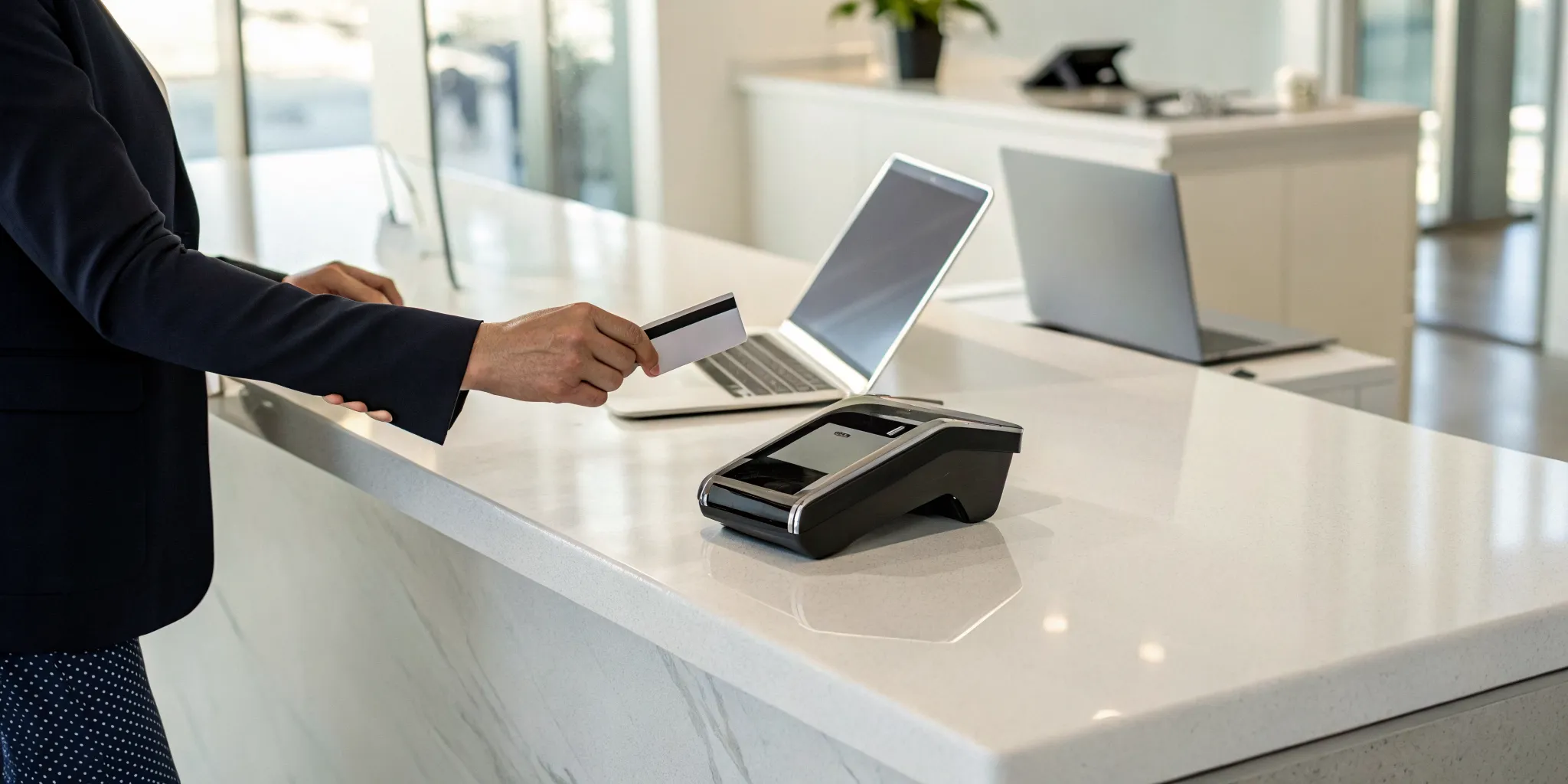
Accepting card payments does more than just increase your sales; it builds credibility and shows customers you’re a professional business. The key to making this happen is a dedicated merchant account. This isn’t the same as your standard business bank account. Instead, it’s a specialized account designed to handle the flow of money from every credit and debit card sale. It’s a foundational tool for protecting your business from fraud and managing your cash flow effectively. We’ll explore how a merchant card processor account works and what to look for in a provider who truly supports your growth.
Key Takeaways
- A Merchant Account is Your Gateway to Sales: Think of this special account as the essential tool for accepting card payments. It allows you to get paid faster, which improves your cash flow, and provides the security needed to protect your business and your customers.
- Choose a Partner, Not Just a Processor: When comparing providers, look past the advertised rates and focus on transparency, support, and flexibility. A great partner offers clear pricing, month-to-month terms, and reliable help, earning your business instead of locking you into a contract.
- Manage Your Account to Control Your Costs: Your job isn’t over after setup. Make a habit of reviewing your monthly statements to understand your fees, ensure your team is trained on secure payment practices, and stay PCI compliant to avoid surprises and protect your bottom line.
What Is a Merchant Account?
If you want to accept credit and debit cards at your business, you’re going to need a merchant account. Think of it as a special bank account designed just for your business. It acts as a temporary holding place for the money you earn from every card sale. Before the funds from a customer’s purchase land in your regular business checking account, they first pass through this merchant account. It’s a crucial link in the payment chain, ensuring that transactions are processed securely and that you get paid correctly. Without one, you’re limited to cash-only sales, which can significantly limit your customer base and growth potential.
Follow the Money: How a Merchant Account Works
So, what happens when a customer pays with their card? The process is pretty seamless. First, the customer’s payment information is captured by your POS system or online checkout. This data is then securely sent to your payment processor, which communicates with the card networks and the customer’s bank to authorize the transaction. Once approved, the funds are deposited into your merchant account. This is where the money sits for a short period, typically one to two business days. Finally, the funds are transferred from your merchant account to your main business bank account in a process called settlement. It’s a quick and automated cycle that ensures you get your money safely.
Merchant Account vs. Payment Processor: What’s the Difference?
It’s easy to get “merchant account” and “payment processor” mixed up, but they play two distinct roles. Your merchant account is the account itself, a temporary home for your funds. The payment processor is the service that makes the transaction happen. It’s the technology that securely sends payment information between your business, the customer’s bank, and your merchant account. Think of it this way: the processor is the messenger carrying the payment details, and the merchant account is the secure mailbox where the money is held before you collect it. Often, a merchant services provider like MBNCard will set you up with both, simplifying the entire process for you.
Why Your Business Needs a Merchant Account
If you’re running a business, you’ve probably realized that handling only cash just doesn’t cut it anymore. A merchant account is the essential link that lets you accept card payments, but its benefits go far beyond that. Think of it less as a simple bank account and more as a central hub for your sales operations. It’s what allows money from your customer’s bank to land safely in your business account after a credit or debit card sale.
Having a dedicated merchant account is a sign of a professional and trustworthy business. It shows customers you’re serious about providing a secure and convenient checkout experience. More importantly, it gives you the tools to manage your money effectively, protect your business from fraud, and streamline your day-to-day tasks. From faster funding that keeps your cash flow healthy to seamless integrations with your other business software, the right merchant account can become a powerful asset for growth. It’s a foundational piece of your business that helps you sell more, operate smarter, and build lasting customer trust.
Accept More Payment Types
In a world where fewer people carry cash, turning away a customer because you can’t take their card is a missed opportunity. A merchant account is your ticket to accepting the payment methods your customers prefer. It’s a special type of business account that allows you to process transactions from all major credit cards, debit cards, and even digital wallets like Apple Pay and Google Pay. Whether you run a brick-and-mortar shop, an online store, or a service business on the go, offering flexible payment options makes it easier for people to buy from you. This simple convenience can make a huge difference in your sales and customer satisfaction.
Get Paid Faster and Improve Cash Flow
Waiting for checks to clear or for payments to process can put a serious strain on your business finances. A merchant account is designed to get you paid quickly, which is a game-changer for managing your money. While some payment aggregators can take several days to deposit your funds, a dedicated merchant services provider can often get your money to you in just one to two business days. This speed is crucial. Faster funding means you can improve your cash flow, giving you quicker access to the capital you need to pay bills, order inventory, and invest back into your business without delay.
Protect Your Business with Built-in Security
Handling customer payment information comes with a lot of responsibility. A major benefit of using a merchant account is the built-in security that protects both you and your customers. Reputable merchant processors are required to follow strict security standards (known as PCI compliance) to keep credit card information safe. They use advanced technologies like encryption and tokenization to secure data as it travels from the point of sale to the bank. This not only helps prevent costly data breaches and fraud but also builds trust with your customers, assuring them that their sensitive information is in good hands every time they make a purchase.
Connect with Your POS and E-commerce Tools
Your business likely relies on a few key tools to run smoothly, and your payment processing should fit right in. A great merchant account integrates seamlessly with the software you already use, including your POS systems and e-commerce platforms. This connection automates your sales data, so you don’t have to spend hours manually reconciling transactions. When your payment processor talks to your other systems, you get a clear, unified picture of your business performance. This makes everything from inventory management to accounting simpler, freeing you up to focus on more important things, like serving your customers and growing your business.
Breaking Down Merchant Account Fees
Let’s talk about one of the most confusing parts of running a business: merchant account statements. If you’ve ever felt like you need a decoder ring to figure out what you’re actually paying, you’re not alone. The good news is that once you understand the basic structure, those fees become much less intimidating. Knowing what to look for is the first step toward finding a transparent provider and keeping more of your hard-earned money.
Most fees fall into a few key categories. You have your transaction fees, which are charged every time you make a sale. Then there are monthly fees for account maintenance and other services. You might also encounter incidental fees, like those for chargebacks, which only appear when a specific event happens. Finally, there are the dreaded hidden fees, which can pop up unexpectedly if you don’t know what to ask about upfront. We’ll walk through each of these so you can review any provider’s pricing with confidence.
Transaction Fees
Transaction fees are the costs you pay for every single purchase a customer makes, whether they tap, swipe, or click “buy now.” These fees are charged by both your payment processor and the banks involved in the transaction. Typically, this fee is a combination of a percentage of the total sale and a small, fixed amount (for example, 2.9% + $0.30). The exact rate can depend on the type of card used, how the transaction is processed, and your provider’s pricing model. Since you’ll pay this on every sale, it’s one of the most important numbers to understand when comparing merchant accounts.
Monthly Service Fees
Think of your monthly service fee as the cost of keeping your merchant account open and active. This predictable, recurring charge covers general account maintenance, access to customer support, and statement preparation. Some providers might also charge a one-time setup fee when you first open your account. While some companies roll various services into one flat monthly fee, others might itemize charges for different features. It’s always a good idea to ask for a complete breakdown so you know exactly what your monthly payment covers and what might cost extra.
Chargeback Fees
A chargeback happens when a customer disputes a charge with their card-issuing bank, which then reverses the transaction. When this occurs, your processor charges you a chargeback fee for managing the dispute process. This fee is applied regardless of whether you win or lose the dispute, and it can be costly. While you can’t prevent every dispute, you can minimize them with clear communication, excellent customer service, and detailed record-keeping. Understanding the chargeback process helps you respond effectively when one does occur.
Hidden Fees to Watch Out For
This is where many business owners get tripped up. Some providers advertise a low transaction rate but make up for it with a long list of additional fees. When vetting a provider, always ask for a full fee schedule and look for items like PCI compliance fees, early termination fees (ETFs), batch fees, or monthly minimum fees. To protect your business, it’s crucial to understand the security rules for handling card data and how your provider supports you. A trustworthy partner will be upfront about all potential costs, allowing you to calculate your total processing cost, not just the surface-level rate.
How to Qualify for a Merchant Account
Applying for a merchant account might feel like a big step, but it’s a standard part of doing business. Think of it like applying for a business line of credit. The payment provider just needs to verify that your business is legitimate, financially stable, and operates within an acceptable level of risk. Underwriters are looking for signs of a healthy, well-run company they can partner with for the long term. Being prepared can make the entire process smooth and simple, removing any guesswork and helping you get approved faster. Let’s walk through what you’ll need to do to qualify so you can start accepting card payments with confidence.
What You’ll Need to Qualify
Getting your paperwork in order ahead of time is the best way to ensure a quick and easy application process. While requirements can vary slightly between providers, most will ask for the same core information to verify your identity and the legitimacy of your business. You should be prepared to provide a valid business license, your federal tax ID number (EIN), and details about your business bank account. Providers will also likely run a credit check on the business owner. Having these documents ready before you start filling out forms will save you a lot of time and potential headaches.
High-Risk Industries: What You Need to Know
Some business types come with a higher risk of chargebacks or fraud, and payment processors label these as “high-risk.” Industries like travel agencies, subscription services, credit repair, and businesses with long fulfillment times often fall into this category. If your business is considered high-risk, it doesn’t automatically mean you’ll be denied. However, you should expect some extra scrutiny during the application process. Providers may ask for more documentation or financial statements. It’s important to know that certain industries are classified as high-risk because it can also affect your processing rates and contract terms.
Why Applications Get Rejected
Seeing an application get rejected is disappointing, but it’s usually for a clear reason. One of the most common factors is a poor personal or business credit history, which can signal financial instability to the provider. Another major reason is simply submitting an incomplete application or having inconsistent information across your documents. Of course, operating in a high-risk industry that a specific provider doesn’t service can also lead to denial. Understanding these potential pitfalls ahead of time allows you to address any weak spots before you even apply, giving you a much better shot at approval.
How to Strengthen Your Application
You can take several proactive steps to make your application as strong as possible. First, gather all your documents and double-check them for accuracy. If you know your credit score is on the lower side, take some time to improve it before applying. It also helps to have a professional website and a clear business plan that outlines what you sell and how you operate. A provider wants to see a well-run, transparent business. To improve your chances of approval, it’s always best to have all your necessary documentation organized and ready to go. Honesty and preparation are your best tools here.
How to Set Up Your Merchant Account
Getting your business ready to accept card payments is a major step, and setting up your merchant account is the key that makes it all possible. The process can seem complicated, but it’s straightforward when you break it down. By following these three steps, you can get your account established quickly and confidently, ensuring you have the right foundation to manage your transactions securely and efficiently. Think of it as a simple checklist to get you from where you are now to your first successful card sale.
Step 1: Gather Your Business Documents
Getting your merchant account set up is a lot smoother when you have all your paperwork ready to go. Providers need to verify that your business is legitimate, so they’ll ask for a few key documents. Before you apply, take a few minutes to gather your business license, your company’s banking information, and your federal tax ID, also known as an Employer Identification Number (EIN). If you don’t have an EIN yet, you can apply for one online for free. Most providers will also run a credit check on the business owner, so be prepared for that as well. Having everything in one place will make the application process feel less like a chore.
Step 2: Choose the Right Provider
Next, you’ll need to choose a provider. You have a few options here. You could go with a traditional bank, but they can sometimes be slower and more rigid. There are also payment aggregators like Square or Stripe, which are easy to start with but may have higher long-term costs. The third option is a dedicated merchant services provider, which often offers more personalized service and competitive pricing. When you compare payment processors, don’t just look at the advertised rates. Consider their customer support, contract terms, and how well their technology integrates with your existing tools. You’re not just picking a processor; you’re choosing a partner for your business.
Step 3: Apply and Review Your Contract
Once you’ve chosen a provider, it’s time to apply. You’ll fill out an application and submit the documents you gathered in step one. The provider will review your business details, including your industry and estimated sales volume, to determine your risk profile and pricing. If you’re approved, you’ll receive a merchant agreement. Please, do not just skim this document. Read your contract carefully to understand every fee, the contract length, and any early termination penalties. This is your chance to spot potential hidden fees and ensure the terms match what you were promised. A good provider will be happy to explain your merchant statement and answer any questions you have before you sign.
What to Look for in a Merchant Services Provider
Choosing a merchant services provider is a lot like picking a business partner. You want someone reliable, honest, and invested in your success. The right provider does more than just process payments; they give you the tools and support to grow your business with confidence. As you compare your options, focus on a few key areas that separate the great partners from the merely adequate ones. A little research now can save you a lot of headaches and money down the road. Look for a provider who is clear about their services and costs, and who offers the flexibility your business needs to thrive.
Transparent Pricing
Nothing sours a business relationship faster than surprise fees on your monthly statement. Look for a provider that is completely upfront about their pricing. You should be able to easily find and understand all their processing fees without having to dig through pages of fine print. A trustworthy partner will clearly explain what you’ll pay for each transaction, so you always know what to expect. Don’t be afraid to ask for a full fee schedule and question any charges you don’t understand. True transparency means no hidden costs, no confusing jargon, and no surprises.
Solutions for In-Person and Online Sales
Your business should be able to accept payments wherever your customers are, whether that’s at your front counter, on your website, or at a local market. A great merchant services provider offers a complete system that seamlessly integrates your in-person and online sales channels. This includes providing the right hardware, like modern POS systems, and the software needed to manage all your payments in one place. This unified approach simplifies your operations, makes bookkeeping easier, and ensures a smooth checkout experience for your customers no matter how they choose to buy from you.
Reliable Customer Support
When you have a question about a transaction or your equipment isn’t working, you can’t afford to wait on hold for hours. Your payment provider should offer fast, accessible, and helpful customer support at no extra charge. Before you sign up, find out what their support options are. Do they offer help by phone and email? Is their team based in the U.S. and available when you need them? The best providers see support as a core part of their service, not an expensive add-on. They understand that your success is their success.
No Long-Term Contracts
Flexibility is essential for any growing business. Be wary of providers that try to lock you into a long-term contract. These agreements can trap you with subpar service or unfavorable rates for years, with steep penalties for canceling early. A provider who is confident in their service and pricing won’t need to lock you in. Look for month-to-month agreements that give you the freedom to make a change if the partnership isn’t working out. This approach forces the provider to consistently earn your business, which is exactly how it should be.
Why Merchants Choose MBNCard
Finding a provider that checks all these boxes can feel like a challenge, but that’s exactly why we built MBNCard differently. We provide dedicated merchant accounts that act as a secure home for your sales funds, allowing you to accept credit cards, debit cards, and digital payments with ease. We lead with transparent pricing programs, like our cash discount option, which is designed to help you significantly reduce or even eliminate your processing fees. Our team provides personalized support and the right mix of in-person and e-commerce tools to fit your unique business. We believe in earning your trust, not locking you into a contract.
Tips for Managing Your New Merchant Account
Getting your merchant account approved is a great first step, but the work doesn’t stop there. Actively managing your account is key to keeping your costs low, your data secure, and your cash flow healthy. Think of it as regular maintenance for a critical piece of your business machinery. By staying engaged, you can catch issues early, understand your expenses, and make sure your payment setup continues to serve your business as it grows. Here are a few simple habits that will make a big difference.
Review Your Transactions and Statements
Make it a habit to sit down with your merchant account statement each month. This isn’t just about spotting errors; it’s about understanding exactly what you’re paying for. Your statement details all the fees associated with your account, from transaction fees charged by the processor to monthly service fees from the acquiring bank. Getting familiar with these charges helps you budget accurately and ensures you’re on the right pricing plan. A consistent review is the best way to identify any surprise charges or opportunities to save money, putting you in full control of your payment processing costs.
Train Your Team on Secure Payments
Your team is your first line of defense in protecting your business and your customers. Proper training ensures that everyone who handles payments understands how to do so securely. This is crucial because it helps keep credit card information safe and builds trust with your clientele. Cover best practices for handling card-present and card-not-present transactions, recognizing potential fraud, and protecting sensitive customer data. A well-trained team not only reduces your risk of data breaches but also helps prevent costly chargebacks and disputes down the line.
Stay PCI Compliant
PCI compliance is a set of security rules designed to protect cardholder data, and every business that accepts credit cards must follow them. These standards, known as the Payment Card Industry Data Security Standard (PCI DSS), are not optional. Failing to comply can result in significant fines or even losing your ability to process card payments. While it sounds intimidating, a good merchant services provider will help you with this process. At MBNCard, we guide you through the requirements to make sure your business remains compliant, secure, and protected.
Periodically Review Your Provider and Rates
Your business isn’t static, and your payment processing needs will change over time. The provider and plan that were perfect when you started might not be the best fit a year or two later. That’s why it’s smart to periodically review your provider and their rates. When you do, look at the total cost of processing, not just a single advertised rate. Consider the quality of customer support, the reliability of the technology, and whether the provider offers solutions that can grow with you. An annual check-in ensures you’re still getting great value and the partnership you deserve.
Related Articles
- How to Accept Credit Cards for Small Business in 4 Steps
- The Ultimate Guide to Business Payment Processing
- What is Merchant Services in Banking? A Full Guide
Frequently Asked Questions
What’s the difference between a merchant account and my regular business bank account? Think of your merchant account as a brief, secure stopover for your money. It’s a special account designed only to receive funds from credit and debit card sales. After a transaction is approved, the money is held here for a short time, usually one or two days, while everything is finalized. Then, the funds are transferred to your main business bank account, which is the account you use for paying bills, payroll, and other operational expenses.
Do I need a merchant account if I use a service like Square or PayPal? Services like Square and PayPal are known as payment aggregators, which means they group many small businesses under their single, massive merchant account. While they are convenient for getting started, a dedicated merchant account is an account that belongs exclusively to your business. As your sales grow, a dedicated account often provides more stable service, better long-term pricing, and a direct partnership with a provider who understands your specific business needs.
How quickly will I actually get my money after a sale? This is a great question because it directly impacts your cash flow. With a dedicated merchant account, you can typically expect the funds from your daily sales to be deposited into your business bank account within one to two business days. This process is called settlement. It’s significantly faster than waiting for a check to clear and ensures you have consistent access to your working capital.
My business is brand new. Can I still qualify for a merchant account? Yes, absolutely. Providers approve new businesses all the time. Since you don’t have a long sales history, they will likely place more emphasis on the owner’s personal credit score and the overall legitimacy of your business. The best way to strengthen your application is to be prepared. Have your business license, federal tax ID (EIN), and a professional website ready to go. This shows providers that you are serious and organized.
What’s the single most important thing to look for when choosing a provider? If I had to choose just one thing, it would be transparency. A provider who is truly a partner will be completely upfront about their pricing, fees, and contract terms. You shouldn’t feel like you need a magnifying glass to understand your statement or be pressured into a multi-year contract with steep cancellation penalties. Look for a provider who answers your questions clearly and is committed to earning your business every month.