The right payment setup for a bustling coffee shop is completely different from what a mobile dog groomer needs. Your business is unique, and your payment solution should be too. Instead of searching for a single price, it’s more helpful to understand how different types of hardware and software fit your specific operations. From simple mobile readers to fully integrated POS systems, the right choice depends on where you work and how you serve your customers. This guide will help you match your daily needs to the right equipment, giving you a realistic understanding of the contactless payment machine cost for your business model.
Key Takeaways
- Choose Hardware That Fits Your Business: The best payment machine is one that aligns with your daily operations. Select a mobile reader for portability, a countertop terminal for a stable checkout, or an integrated POS to run your entire business from one place.
- Understand the Total Cost of Ownership: The price of the machine is only a small part of the equation. Your true cost comes from recurring transaction rates and monthly service fees, so analyze these carefully to protect your long-term profitability.
- Read the Fine Print to Avoid Surprises: Always ask for a complete fee schedule before signing an agreement. Be on the lookout for early termination fees, monthly minimums, and rate markups that can significantly increase your costs over time.
What Are Your Contactless Payment Options?
Before we dive into the costs, let’s first look at your hardware options. The right contactless payment machine is more than just a tool to accept money; it’s a central part of your customer experience and daily workflow. The best choice for your business depends entirely on how you operate. A mobile dog groomer needs something completely different from a bustling coffee shop, and your payment setup should reflect that. To make the right call, you’ll want to think about where you interact with customers, your daily transaction volume, and whether you need your system to do more than just process payments.
Your options generally fall into three buckets: mobile card readers, countertop terminals, and integrated Point of Sale (POS) systems. Each is designed for a specific business environment and comes with a unique set of capabilities and costs. Mobile readers offer ultimate portability, countertop terminals provide steadfast reliability, and integrated POS systems act as a complete command center for your business. Getting familiar with these categories is the first step toward finding a solution that not only lets customers tap to pay but also genuinely supports your business goals. Let’s break them down.
Mobile Card Readers
If you run your business on the go, a mobile card reader is your best friend. These are small, portable devices that connect to a smartphone or tablet via Bluetooth, turning your personal device into a payment terminal. They’re perfect for accepting payments at farmers’ markets, craft fairs, or even in a client’s home if you’re a service provider. Because of their simplicity and low initial cost, they’re also a great starting point for new businesses or those with a low volume of card transactions. The upfront cost for a credit card machine like this is often minimal, with some processors even providing one for free when you open an account.
Countertop Terminals
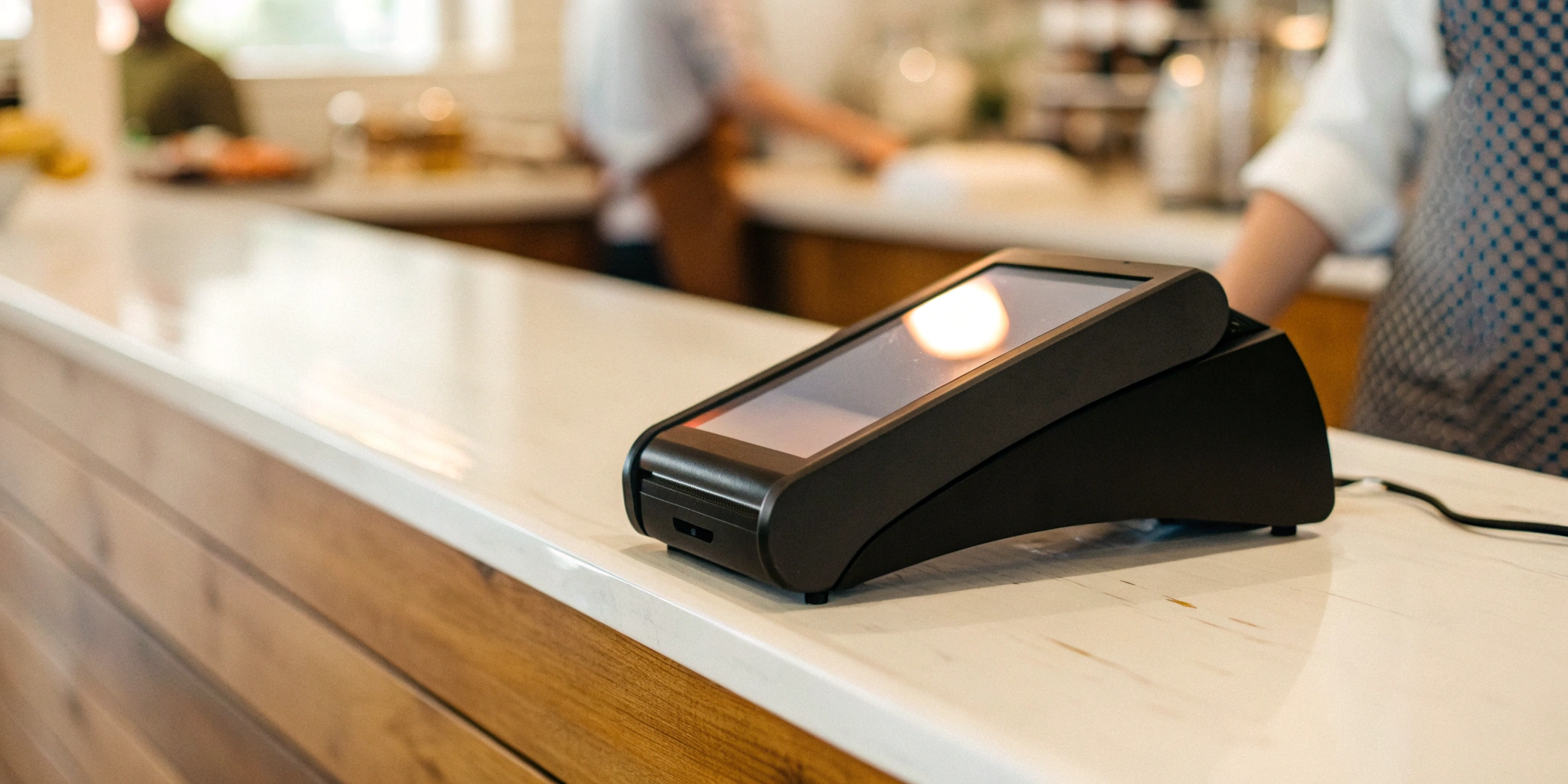
This is the classic, reliable workhorse you see at most retail stores and restaurants. Countertop terminals are sturdy, standalone devices designed to sit next to a cash register. They connect directly to the internet and a power source, making them fast and dependable for high-traffic environments. If you have a fixed checkout location, this is likely the option for you. These machines are built to handle a steady stream of transactions without a hitch, offering a straightforward and secure way for customers to tap, dip, or swipe. This keeps your line moving smoothly and your sales flowing, especially during your busiest hours.
Integrated POS Systems
An integrated Point of Sale (POS) system is more than just a payment processor—it’s the command center for your entire business. These comprehensive systems combine hardware (like a touch screen, cash drawer, and card reader) with powerful software that can manage inventory, track sales data, handle employee time clocks, and run customer loyalty programs. While they represent a larger initial investment, they can streamline your operations significantly. An integrated POS is ideal for businesses with complex needs, like restaurants that need to manage tables and orders or retailers with large inventories. It brings all your essential functions together in one place.
Breaking Down the Upfront Costs
Alright, let’s talk numbers. The first cost you’ll run into is the hardware itself. The price tag can vary quite a bit depending on what you need, from a simple mobile reader to a full-blown point-of-sale system. Think about how your business operates—are you at a farmer’s market, a boutique, or a busy restaurant? Your answer will point you toward the right equipment and help you understand the initial investment required to start accepting contactless payments. This isn’t just about buying a machine; it’s about choosing the right tool for the job so you can serve your customers smoothly and efficiently.
Mobile Reader Pricing
If your business is always on the move, a mobile card reader is your best friend. These small devices pair with your smartphone or tablet, making them perfect for food trucks, artists at craft fairs, or contractors who take payments on-site. The upfront cost is minimal, typically ranging from $0 to $100. Some payment processors even provide a free mobile reader when you sign up for an account. They are a fantastic, low-cost entry point for businesses with lower sales volume or those who need flexibility above all else.
Countertop Terminal Costs
For businesses with a dedicated checkout area, like a retail store or a coffee shop, a countertop terminal is the classic choice. These are the sturdy, reliable machines you’re used to seeing. They connect directly to your internet and power source, ensuring a stable connection for every transaction. You can expect to purchase one outright for about $150 to $500. If you prefer to lease, you’ll likely pay between $20 and $50 per month. This option provides a professional and permanent payment station for your customers, giving them a familiar and secure checkout experience.
Integrated System Investments
When you need more than just a payment processor, you’re looking at an integrated Point of Sale (POS) system. Think of it as the command center for your business. Beyond taking payments, a modern POS system can manage inventory, track sales data, handle employee time clocks, and more. The initial hardware investment is higher, usually between $500 and $2,000, with monthly software fees from $50 to $150. This is the right choice for restaurants, multi-location retailers, and any business that needs a powerful tool to streamline its operations.
To Buy or To Lease?
This is a big question for many business owners. Buying your equipment means a higher upfront cost, but you own it outright. Over time, this is almost always the more affordable option, especially if you plan to be in business for years. Leasing, on the other hand, keeps your initial costs low. It can be a good choice if cash flow is tight. However, be careful here. Leases often come with long, iron-clad contracts and can end up costing you two to three times more than the machine’s actual value. Always read the fine print to avoid getting locked into an expensive agreement.
Decoding Your Ongoing Processing Costs
The price tag on a payment machine is just the beginning. The real cost of accepting payments comes from the ongoing fees you’ll pay every month. These recurring charges can feel complicated, but understanding them is the key to protecting your bottom line. Think of it like buying a car—the sticker price is one thing, but you also have to account for gas, insurance, and maintenance. It’s the same with payment processing. Getting a clear picture of your transaction fees, monthly charges, and other costs will help you choose a partner who is truly invested in your success, not just in hiding fees in the fine print.
Many business owners get frustrated by confusing statements and unexpected charges that eat into their profits. That’s why it’s so important to work with a provider who values transparency. Before you sign any agreement, you should have a complete breakdown of every potential fee. This includes the percentage you’ll pay on each sale, any flat monthly service charges, and costs related to security and maintenance. Let’s walk through the most common ongoing costs so you know exactly what to look for and what questions to ask. This way, you can avoid surprises on your monthly statement and keep more of your hard-earned money where it belongs—in your business.
A Look at Transaction Fees
Every time a customer taps their card or phone, a small percentage of that sale goes toward processing the payment. These are your transaction fees, and they make up the bulk of your processing costs. Typically, you can expect to pay between 0.8% and 1.75% for in-person sales. For transactions where the card isn’t physically present, like online or over-the-phone orders, the rate is higher—usually between 2.9% and 3.5%—due to the increased risk of fraud. If your business handles a high volume of sales, you may be able to secure better rates with your provider, so don’t hesitate to ask.
Monthly Service Fees
On top of transaction fees, many providers charge a flat monthly service fee. You can think of this as a subscription for using their network and support services. These fees can vary dramatically, ranging anywhere from $0 to over $100 per month for each terminal you use. A lower monthly fee might seem appealing, but it’s important to understand what it includes. Does it cover customer support, statement preparation, or access to a reporting dashboard? Some providers bundle multiple services into this fee, while others charge for them separately. Always ask for a clear explanation of what your monthly service fees cover before you commit.
PCI Compliance Costs
PCI compliance is a set of security standards designed to protect your customers’ sensitive payment data. Staying compliant is non-negotiable, and it often comes with its own set of costs. Some processors include PCI compliance support in their monthly package, while others charge a separate fee, which could be a small monthly charge or a larger annual one. Failing to meet these security standards can lead to hefty non-compliance penalties, which are far more expensive than the initial compliance fee. Make sure your provider clearly outlines their PCI program and any associated costs so you can keep your business and your customers secure without any surprises.
Equipment Maintenance and Support
Your payment terminal is a critical piece of hardware, so you need to know what happens if it breaks or needs an update. Some providers offer maintenance and support plans as part of their service package, while others charge extra. Be wary of companies that offer a “free” machine, as the cost of that hardware is often recouped through higher transaction rates or hidden fees. Always read your contract carefully to understand who is responsible for repairs and replacements. A good provider will be transparent about their equipment and support policies, ensuring you’re not left with a broken terminal and a line of frustrated customers.
Watch Out for These Hidden Fees
Nothing sours the excitement of a new business tool faster than a bill filled with surprise charges. When you’re choosing a contactless payment machine, the price tag on the device is just one piece of the puzzle. The real cost often lies in the ongoing fees, and some providers are notorious for tucking extra charges deep into the fine print of their contracts.
Getting a clear picture of your total cost of ownership is essential. It’s not just about the monthly fee or the transaction rate; it’s about understanding every single line item you could be charged for. Before you sign any agreement, make it a habit to ask for a complete fee schedule. A transparent partner will have no problem providing one. Being proactive here helps you avoid frustrating expenses down the road and ensures you’re partnering with a company that values honesty as much as you do.
Setup and Activation Fees
Right out of the gate, some payment processors will charge you just for getting started. These one-time costs, often called setup, application, or activation fees, cover the administrative work of creating your merchant account and programming your new terminal. While they’re not always exorbitant, they are an expense you can often avoid. Many providers, especially those focused on building long-term relationships with merchants, waive these initial fees entirely. When comparing your options, be sure to ask directly: “Are there any fees for setting up my account or activating my equipment?” It’s a simple question that can save you money from day one.
Early Cancellation Penalties
Signing a merchant services agreement can sometimes feel like a long-term commitment, and some providers make it a costly one to leave. Early cancellation penalties, or early termination fees (ETFs), are charged if you decide to switch providers before your contract is up. These fees can be surprisingly steep, sometimes running into hundreds of dollars. Always read your contract carefully to understand the term length—whether it’s one, three, or five years—and the specific financial penalty for ending the service early. To give yourself more flexibility, look for providers who offer month-to-month agreements without a long-term lock-in.
Processing Rate Markups
It’s a classic tactic: a company offers a sleek, new payment terminal for a very low price, or even for free, only to make up for it with inflated processing fees. While the cheap hardware is tempting, high transaction rates can cost you far more in the long run. Don’t just look at the cost of the machine; analyze the entire fee structure. Ask for a detailed breakdown of the processing rates and compare the “effective rate” (your total monthly fees divided by your total monthly sales) from different providers. This gives you a true apples-to-apples comparison of what you’ll actually be paying on every sale.
Monthly Minimums and Batch Fees
Two smaller fees that can catch business owners by surprise are monthly minimums and batch fees. A monthly minimum is a charge you’ll incur if your transaction processing fees don’t reach a certain threshold set by your provider. For example, if the minimum is $25 and you only generate $15 in fees, you’ll be charged the extra $10. This can be a challenge for new or seasonal businesses with fluctuating revenue. Batch fees are small, daily charges for settling your transactions and transferring the funds to your bank. While minor on their own, these fees add up over the course of a month.
Chargeback Fees
Chargebacks happen when a customer disputes a transaction with their card issuer, forcing a refund. While they are an unavoidable part of doing business, they also come with an extra cost. In addition to returning the funds from the original sale, your payment processor will likely charge you a separate chargeback fee for the administrative work involved in handling the dispute. This fee can range from $15 to $30 or more per incident. It’s important to understand your provider’s chargeback policy and what resources they offer to help you fight illegitimate claims, as these costs can quickly impact your profitability.
Find the Right Machine for Your Budget
Choosing the right contactless payment machine isn’t just about finding the lowest price tag. It’s about finding the best value for your specific business. The terminal that works wonders for a bustling coffee shop might be overkill for a freelance photographer who only processes a few payments a week. To make the right call, you need to balance the upfront cost with your daily operational needs, security requirements, and long-term growth plans. Let’s walk through the key factors to consider so you can invest in a machine that truly works for you.
Must-Have Features for Your Business
The cost of a credit card machine can range from free to over $2,000, and that price is largely driven by its features. A simple mobile card reader, perfect for markets or service calls, might only cost you up to $100—some processors even provide them for free when you sign up. For a brick-and-mortar store, a basic countertop terminal that accepts swipes and chip cards will likely run a few hundred dollars. If you need advanced capabilities like a built-in receipt printer, wireless connectivity, or inventory tracking, you’ll be looking at a higher price point. The key is to map out your daily transaction process and identify the features that are essential, not just nice to have.
Security and Compliance Needs
When it comes to payments, security is non-negotiable. Your top priority should be ensuring any machine you consider is PCI compliant. PCI compliance is the industry standard for protecting cardholder data, and failing to meet it can expose you to hefty fines and damage your reputation. Another critical feature is an EMV chip reader. These readers offer enhanced security for every transaction, significantly reducing your liability for fraudulent charges. Investing in a secure, compliant machine isn’t an expense—it’s a fundamental protection for your business and your customers. Don’t be tempted to cut corners here; it will always cost you more down the road.
Integrating With Your Current Systems
Your payment machine should make your life easier, not more complicated. Before you buy, think about how the new hardware will fit into your existing workflow. Does it need to connect with your accounting software, inventory management system, or customer relationship management (CRM) platform? Choosing a machine that integrates smoothly with the tools you already use will save you countless hours of manual data entry. Many providers offer bundled POS kits that include a terminal, cash drawer, and receipt printer, which can be more cost-effective than buying each component separately. Consider your entire business ecosystem to ensure your new terminal is a seamless addition.
Calculating Your Long-Term ROI
The sticker price of the machine is just the beginning of the story. To understand the true cost, you need to calculate its long-term return on investment (ROI). This means looking beyond the initial hardware purchase and factoring in all the ongoing expenses, like transaction fees, monthly software subscriptions, and potential maintenance costs. While leasing a terminal might seem like a cheaper option upfront, it almost always costs more over time than buying it outright. By taking a holistic view of all associated costs, you can make a smarter financial decision and choose a solution that supports your profitability for years to come.
Related Articles
- 5 Best Credit Card Terminals for Small Business
- Credit Card Machine Price: A Small Business Guide
- 6 Best Small Business Credit Card Machines
- The 5 Best Contactless Payment Terminals
- 5 Best Portable Credit Card Machines for Small Business
Frequently Asked Questions
Is it better to buy or lease my payment machine? For most businesses, buying your equipment is the smarter financial move in the long run. While leasing keeps your initial investment low, the monthly payments often add up to far more than the machine’s actual value over the life of the contract. Leases can also lock you into long-term agreements that are expensive to break. Buying gives you ownership and freedom, which usually saves you significant money over time.
What’s the cheapest way to start accepting contactless payments? If you’re just starting out or run a mobile business, a mobile card reader is your most affordable entry point. These small devices connect to your smartphone or tablet and typically cost less than $100. Many payment processors, including us, will even provide one for free when you open a merchant account, allowing you to start accepting payments with very little upfront investment.
What is PCI compliance and why is it so important? Think of PCI compliance as the essential security standard for the entire payments industry. It’s a set of rules designed to ensure that all businesses that handle credit card information maintain a secure environment. Adhering to these standards protects your customers’ sensitive data from theft and protects your business from massive fines and liability. It’s a non-negotiable part of accepting payments securely.
Beyond the transaction rate, what other fees should I look out for? It’s wise to look at the whole picture. Ask any potential provider for a complete fee schedule before signing anything. Keep an eye out for monthly service or statement fees, early cancellation penalties if you’re in a contract, and daily batch fees for settling your transactions. A transparent partner will be upfront about all potential charges so there are no surprises on your monthly statement.
Do I need a full POS system or is a simple terminal enough? This really depends on the complexity of your business. If you just need a reliable way to accept payments at a checkout counter, a sturdy countertop terminal is perfect. However, if you need to manage inventory, track detailed sales reports, run loyalty programs, or manage employee schedules, an integrated Point of Sale (POS) system is a much better fit. It acts as a central hub for your entire operation, not just a payment tool.