Every time a customer pays, they are placing their trust in you. They trust you to protect their financial information and provide a secure transaction. In today’s world, security is non-negotiable. Contactless payments offer a significant advantage here, using advanced encryption and tokenization to protect sensitive data with every tap. This means the customer’s actual card number is never transmitted, drastically reducing the risk of fraud. A modern contactless credit card machine for retail is more than just a tool for convenience; it’s a crucial part of your security infrastructure, helping you build confidence with every person who walks through your door.
Key Takeaways
- Create a better checkout with contactless payments: Offering tap-to-pay meets modern customer demands for speed and security, helping you shorten lines, build trust, and improve the overall shopping experience.
- Choose a terminal that fits your workflow: Prioritize essential features like compatibility with all payment types (including mobile wallets), robust security, and seamless integration with your current point-of-sale system.
- Look beyond the hardware price: To find the most affordable solution, you need to understand the complete cost, which includes the initial equipment price, ongoing transaction rates, and any monthly service fees.
What Exactly Is a Contactless Card Machine?
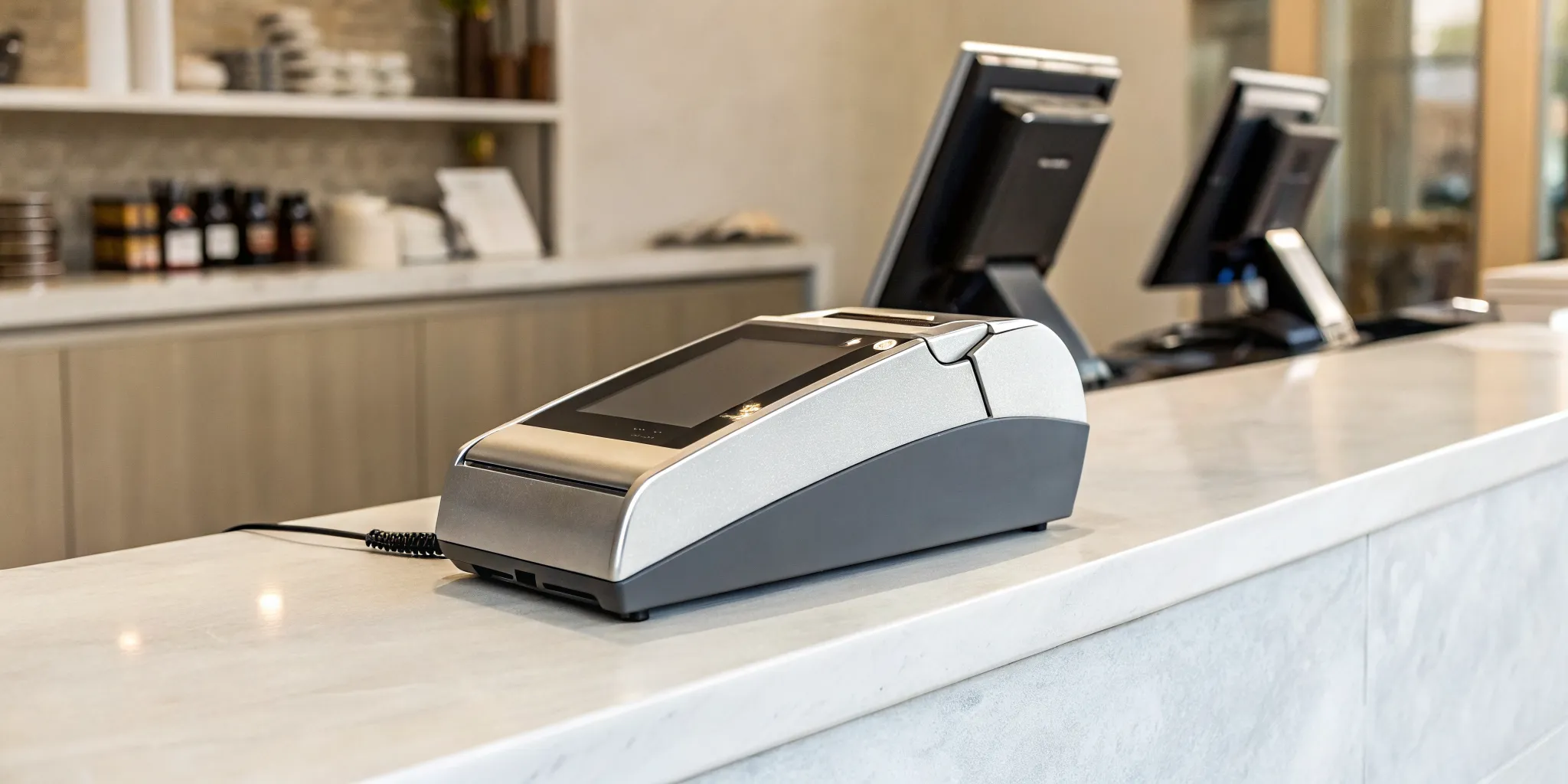
You’ve seen it happen at the checkout counter: a customer simply taps their card or phone on the terminal, and the transaction is complete in seconds. That’s a contactless card machine in action. At its core, it’s a payment terminal that allows customers to pay without swiping or inserting their card. Instead of a magnetic stripe or chip reader doing the work, these devices use a technology called Near Field Communication (NFC) to process payments.
Think of NFC as a secure, short-range wireless conversation between the customer’s card (or smartphone) and your terminal. When the card is held close to the machine, it instantly shares the payment information needed to complete the sale. This process is not only fast but also incredibly secure. Each transaction is protected by layers of encryption and tokenization, which means the customer’s actual card number is never transmitted. Instead, a unique, one-time code is used for each purchase, making it extremely difficult for fraudsters to capture sensitive data.
For you as a business owner, a contactless machine is more than just a piece of hardware. It’s a tool that modernizes your checkout, speeds up lines, and shows customers you value their time and security. It’s the new standard for in-person payments, and having one signals that your business is current, efficient, and ready to serve customers the way they prefer to pay.
Why Your Retail Business Needs to Go Contactless
Let’s get straight to it: your customers want easier ways to pay. If you’re still relying solely on cash or traditional card swipes, you’re likely creating unnecessary friction at checkout and missing out on sales. The shift to contactless payments isn’t just a passing trend; it’s a fundamental change in how people prefer to shop.
Think about your own shopping habits. It’s no surprise that a recent report found the vast majority of shoppers prefer to pay with debit cards and credit cards over cash. Offering tap-to-pay is the next logical step in meeting that expectation. When customers see you accept contactless payments, it instantly signals that your business is modern, secure, and trustworthy. It gives them the convenience they expect and shows you value their time.
Interestingly, while adoption is growing, some reports show that many consumers are still learning about all the ways they can use contactless methods. This isn’t a drawback; it’s your opportunity. By offering a simple tap-to-pay solution, you can guide your customers through a faster, cleaner checkout process. You become the business that makes their life easier, which is a powerful way to build loyalty.
Of course, making the switch involves some planning. Implementing new technology always comes with technical challenges, security concerns, and compliance needs. But these are solvable problems. The key is to partner with a payment provider who can walk you through the process, ensuring your system is secure and your team is trained. Getting this right means you can offer a seamless experience that protects both your business and your customers, turning a potential headache into a major competitive advantage.
Key Features to Look for in a Contactless Terminal
Choosing a new credit card machine can feel overwhelming with all the options out there. But when you know what to look for, you can confidently pick a terminal that makes your life easier and keeps your customers happy. The right device isn’t just about accepting payments; it’s about creating a seamless checkout experience that’s fast, secure, and reliable. Before you commit to a new terminal, take a moment to think about what features will truly serve your business.
Focus on the essentials that impact your day-to-day operations. Think about the types of payments your customers prefer, the security standards that protect your business, and how easily the new hardware will fit into your current setup. A little research upfront can save you from future headaches and ensure you invest in a tool that helps your business grow. Let’s walk through the key features you should have on your checklist.
Check for Payment Compatibility
The last thing you want is to turn away a customer because you can’t accept their preferred payment method. Your terminal should be ready for anything. This means it needs to handle all the modern ways people pay, including traditional chip and swipe cards. More importantly, it must support NFC (near-field communication) technology for tap-to-pay cards and mobile wallets like Apple Pay and Google Pay. The more payment options you offer, the more convenient your checkout process becomes, which is a simple way to keep customers coming back.
Prioritize Top-Notch Security
In payment processing, security is non-negotiable. A good contactless terminal should come with robust security features to protect both your business and your customers from fraud. Look for terminals that are PCI compliant and offer end-to-end encryption. This ensures that sensitive cardholder data is scrambled and protected from the moment a card is tapped or inserted until the transaction is complete. Investing in a secure terminal not only protects your bottom line but also builds trust with your customers, showing them you take their data privacy seriously.
Ensure It Works with Your POS
Your credit card terminal is just one piece of your sales puzzle. It needs to communicate seamlessly with your Point of Sale (POS) system to keep your operations running smoothly. Before buying, confirm that the terminal is compatible with your existing POS software. Proper integration allows you to automatically sync sales data, track inventory, and manage customer information without manual entry. This connection saves you time, reduces the risk of human error, and gives you a clear, accurate picture of your business performance every day.
Look for Fast Transaction Speeds
Speed matters at the checkout counter. A slow terminal can lead to long lines and frustrated customers. Look for a device that processes transactions in just a few seconds. But transaction speed isn’t just about the customer experience; it’s also about your cash flow. Find out how quickly the funds will be deposited into your bank account. Many providers offer next-day funding, and some even provide instant deposits for a small fee. Faster funding means you have quicker access to your hard-earned money.
Find a Simple, User-Friendly Interface
Your new terminal should be easy for everyone to use, from your newest employee to your least tech-savvy customer. A simple, intuitive interface with a clear screen and straightforward prompts makes the entire payment process smoother. Look for a device that is easy to set up and connect right out of the box. When the technology is simple to operate, your team can focus on providing great customer service instead of fumbling with a complicated machine. This focus on a great checkout experience can make a big difference in customer satisfaction.
A Look at Popular Contactless Terminals
Once you start looking at specific models, you’ll find a wide range of options, each with its own strengths. The perfect terminal for a bustling boutique might not be the right fit for a mobile coffee cart. To help you get familiar with what’s out there, let’s explore some of the most popular and reliable contactless machines on the market. Think of this as your starting point for finding a device that feels like it was made just for your business. We’ll cover everything from simple, all-in-one units to powerful, customizable smart terminals, giving you a clear picture of what each can bring to your checkout counter.
MBNCard Payment Solutions
Instead of offering a single, one-size-fits-all device, we take a more personalized approach. At MBNCard, we partner with you to understand your specific business needs, from your sales volume to your POS setup. We then help you select the ideal hardware, whether it’s a sleek countertop model or a versatile handheld terminal from a top brand like Clover or PAX. Our focus is on pairing that perfect piece of equipment with a transparent, affordable processing plan. This way, you get a complete payment solution that includes reliable technology and dedicated support, all without the hidden fees you might find elsewhere.
Square Terminal
You’ve likely seen the Square Terminal in local coffee shops and boutiques, and for good reason. It’s a fantastic all-in-one device that’s both affordable and incredibly easy to use, making it a favorite among new and small business owners. The terminal includes a user-friendly touchscreen and a built-in receipt printer, so you have everything you need to start accepting payments right out of the box. According to NerdWallet, it’s a great all-in-one option, especially since it integrates seamlessly with Square’s free point-of-sale software, which helps you manage sales and inventory without extra costs.
Clover Flex
The Clover Flex is a step up in power and versatility, designed for businesses that need more than just a simple payment processor. This handheld device is a workhorse, perfect for retail stores, service providers, and even restaurants that need to take payments at the table. Depending on your software plan, the Clover Flex can help you manage your inventory, view detailed sales reports, and set up individual employee logins. It’s a powerful handheld reader that adapts to your workflow, whether you’re ringing up customers at the counter or checking them out on the sales floor.
Ingenico Move/5000
If your business is always on the move, the Ingenico Move/5000 is a terminal worth considering. It’s built for mobility and performance, making it ideal for pop-up shops, trade shows, or any retailer who wants the freedom to complete a sale anywhere. This device is known for its robust security features and reliable connectivity, offering options for Wi-Fi, Bluetooth, and 4G. Its long-lasting battery ensures you can get through a busy day without being tied to a power outlet. The Move/5000 is designed to keep your business running smoothly, no matter where you are.
PAX A920 Pro
For the business owner who loves a modern, tech-forward approach, the PAX A920 Pro is a standout choice. This terminal looks and feels like a high-end smartphone, with a large, vibrant touchscreen and an intuitive interface built on an Android operating system. This design not only makes it easy for your team to learn but also opens the door to a world of specialized business apps through the PAXSTORE. The A920 Pro is more than just a payment terminal; it’s a smart, customizable tool that can handle everything from transactions and inventory to customer loyalty programs.
Breaking Down the Costs of a Contactless Machine
Thinking about the cost of a new contactless machine can feel a little overwhelming, but it doesn’t have to be. When you know what to look for, you can easily compare your options and find a solution that fits your budget. The price of a contactless terminal isn’t just the number on the price tag; it’s a combination of a few key things.
First, you have the initial cost of the hardware itself. This is the one-time expense for the physical machine that will sit on your counter or that you’ll carry with you. After that, you’ll have ongoing costs, which are typically broken into two categories: transaction fees and monthly service fees. Transaction fees are the small percentage and flat fee you pay on every single sale, while monthly fees are like a subscription for the software and support that keep your system running.
Understanding these different costs is the key to avoiding surprises on your monthly statement. A provider might offer a free terminal but charge higher transaction fees, while another might have a monthly subscription but lower per-transaction rates. It’s all about finding the right balance for your business’s sales volume and needs. Let’s walk through each of these costs so you can feel confident in your decision.
Upfront Equipment and Setup Costs
The first expense you’ll encounter is the cost of the hardware. To accept tap-to-pay and mobile wallets, you’ll need a contactless-enabled reader. The price for these devices can vary quite a bit, from an affordable, simple card reader that connects to your phone to a more robust, all-in-one point-of-sale (POS) system with a built-in printer and scanner.
Think about what your business truly needs. A small pop-up shop might only need a basic mobile reader, while a busy retail store will benefit from a full-featured terminal. Some payment processors offer free or discounted hardware when you sign up for their services, but always read the fine print. Make sure you understand if you’re buying the equipment outright or just leasing it.
Ongoing Transaction Fees
After you have your machine, the most common cost you’ll see is the transaction fee. This is what you pay to the processor every time a customer makes a purchase. These fees are usually a combination of a percentage of the sale plus a small, flat fee. For example, a common rate structure you might see is 2.6% + $0.15 per transaction.
These rates can sometimes change depending on the type of card your customer uses, so it’s a good idea to ask your provider for a full breakdown. While these fees might seem small, they add up over time, so understanding your payment processing fees is essential for managing your cash flow and pricing your products effectively.
Monthly Service and Support Fees
In addition to transaction fees, many providers charge a monthly fee for their software, customer support, and other services. Some companies offer a free basic plan, which is great for new or very small businesses. Other providers have tiered plans with monthly costs that might range from $20 to over $100.
So, what are you getting for that monthly fee? It often includes access to your sales dashboard, inventory management tools, customer data reports, and technical support. When you’re comparing options, don’t just look at the price. Consider the value you’re getting. Having reliable customer support you can call during a busy Saturday rush can be well worth a reasonable monthly fee.
Watch Out for Hidden Fees
This is where working with a transparent partner really matters. The last thing you want is to be surprised by a bunch of unexpected charges on your monthly statement. Some less-reputable processors might hide extra costs in the fine print, like PCI compliance fees, statement fees, batch fees, or even early termination fees if you decide to switch providers.
Before you sign any agreement, ask for a complete list of all potential fees. A trustworthy credit card payment processor will be upfront about their pricing and happy to walk you through every line item. By choosing a partner who values clear pricing and security, you can handle payments with confidence and focus on what you do best: running your business.
The Real-World Benefits of Going Contactless
Switching to contactless payments isn’t just about keeping up with technology. It’s a strategic move that directly impacts your daily operations, customer happiness, and bottom line. When you make paying easier, faster, and safer, you create a better environment for everyone who walks through your doors. Let’s look at the tangible benefits you can expect when you add tap-to-pay capabilities to your checkout counter.
Speed Up Your Checkout Process
Long lines are a major turn-off for shoppers. Contactless payments are one of the simplest ways to shorten wait times and keep your checkout flowing smoothly. A simple tap of a card or phone takes just a couple of seconds, which is significantly faster than inserting a chip card and waiting for it to process. This efficiency adds up, allowing you to serve more customers during peak hours. By streamlining the checkout process, you not only make your current customers happier but also create a more efficient workflow for your staff, freeing them up to focus on providing great service instead of managing a long queue.
Give Your Customers a Better Experience
Today’s shoppers expect convenience. When they walk into your store, they’re looking for a fast, easy, and secure experience from start to finish. Offering contactless payments shows that you understand and value their time. It removes friction from the most critical part of their journey: the purchase. This seamless transaction helps build positive feelings about your brand, encouraging repeat business and fostering loyalty. A smooth payment process is a small detail, but it’s one that leaves a lasting impression and contributes to a positive overall customer experience.
Offer a Safer, Cleaner Way to Pay
In a world where people are more conscious of hygiene, offering a touch-free payment option is a huge plus. Customers appreciate not having to hand over their card or touch a keypad. Beyond physical cleanliness, contactless payments are also incredibly secure. They use advanced encryption and tokenization to protect cardholder data, meaning the actual card number is never transmitted during the transaction. This technology makes it extremely difficult for thieves to intercept sensitive information, giving both you and your customers peace of mind with every tap.
Turn More Browsers into Buyers
Every sale counts, and you never want a clumsy payment process to be the reason a customer walks away. By accepting all modern payment types, including Apple Pay and Google Pay, you cater to everyone’s preferences. This flexibility makes your business appear more professional and trustworthy. It also ensures you can capture sales from customers who might have forgotten their wallet but have their phone handy. Giving people more ways to pay is a simple yet effective strategy to convert more shoppers into paying customers and maximize your revenue potential.
Common Challenges When Making the Switch
Switching to a new payment system can feel like a big project, but knowing what to expect makes the process much smoother. While the benefits of contactless payments are clear, it’s smart to be aware of the potential hurdles before you begin. Think of it as creating a game plan. By anticipating these common challenges, you can tackle them head-on and ensure a seamless transition for your business, your team, and your customers.
Most of the work falls into three main categories: getting the technology set up, training everyone on how to use it, and making sure your security is solid from day one. It might sound like a lot, but breaking it down makes it manageable. Plus, a great payment partner will guide you through each step, so you’re never left figuring things out on your own. Let’s walk through what you can expect.
Handling the Technical Integration
First up is the hardware. To accept tap-to-pay, you’ll need a contactless-enabled card reader. This is a necessary investment, but it’s also an opportunity to upgrade your checkout experience. The real task is making sure your new terminal talks to your existing point-of-sale (POS) system without any hiccups. A smooth technical integration is key to avoiding checkout delays or sales tracking errors. Your payment solutions provider should be able to confirm compatibility and help you get everything connected correctly, so your daily operations aren’t disrupted.
Training Your Team and Customers
New technology is only as good as the people using it. Your team is on the front lines, so they need to feel confident with the new contactless terminals. A quick training session can cover how to process payments, troubleshoot minor issues, and guide customers. Speaking of customers, you can’t assume everyone knows what their options are. In fact, one report found that only 37% of consumers were aware of contactless methods. You can help by educating your customers with a simple sign at the register or a friendly prompt from your cashiers, like, “You can tap to pay if you’d like!”
Getting Security Right from the Start
Security is always a top priority when you’re handling payments. The good news is that contactless payments are incredibly secure, thanks to encryption and tokenization technology that protects card data. The main challenge for you as a business owner is ensuring your new setup meets all regulatory standards, like PCI compliance. This isn’t something you should have to become an expert in. Your payment processor has a responsibility to provide you with compliant solutions and help you understand your security obligations, protecting both your business and your customers from day one.
Where to Find Trustworthy Reviews
When you’re ready to invest in a new terminal, you want to hear from people who have actually used it. Finding honest, unbiased feedback is key to making a smart decision for your business. Instead of relying on marketing materials alone, it’s best to look at a mix of expert analysis and real-world user experiences. This approach helps you get a complete picture of how a machine will perform in a real retail environment.
Start with reputable websites that specialize in business technology and finance. These sources often provide comprehensive evaluations of different hardware options. For instance, NerdWallet offers in-depth reviews of credit card readers, breaking down their features, pricing, and overall user experience. Similarly, eMerchant Authority is another excellent resource that provides detailed rundowns of top-rated credit card machines, highlighting the pros and cons of each to help you find the right fit for your specific needs.
While expert opinions are valuable, don’t overlook feedback from fellow business owners. Customer reviews on major retail sites can give you a clear picture of a machine’s day-to-day performance and reliability. You can browse customer ratings for various card readers for small business on sites like Best Buy to see what real users are saying. You can also find candid insights in online forums and communities. Small business groups on Reddit or Facebook are often filled with personal stories and recommendations from entrepreneurs who have already gone through the process of choosing a contactless terminal.
Choosing the Right Terminal for Your Business
The perfect credit card machine isn’t one-size-fits-all. The terminal that works wonders for a bustling downtown restaurant might be total overkill for a quiet neighborhood bookstore. Your ideal setup depends entirely on how you operate, who your customers are, and what you need your technology to do beyond simply taking a payment. Think about your daily workflow. Do you need a machine that can handle a constant stream of customers without slowing down? Or do you need something you can slip into your pocket for a weekend market?
Making the right choice is about finding a balance between functionality, cost, and the experience you want to create for your customers. A clunky, slow terminal can lead to long lines and frustrated shoppers, while a sleek, fast system makes checkout feel effortless. Before you commit to a device, take a moment to map out your needs. Consider your sales volume, your physical space, and any extra features, like inventory tracking or employee management, that could make your life easier. This will help you find a terminal that not only processes payments but also supports your business as it grows.
For Small, Independent Shops
If you run a boutique, café, or local shop, your focus is likely on creating a great customer atmosphere and managing costs effectively. You don’t need a complex system with a steep learning curve. Instead, you need a reliable and straightforward terminal that makes it easy for customers to pay. Introducing the ability to accept card payments can directly improve sales and keep your customers happy. A simple countertop machine that accepts chip, swipe, and contactless payments is often the perfect fit. Look for a device with an intuitive interface that your team can learn in minutes, ensuring a smooth and friendly checkout every time.
For High-Volume Retailers
When you’re processing hundreds of transactions a day, speed and efficiency are everything. For high-volume businesses like grocery stores or busy retail outlets, your terminal needs to be a workhorse. Look for machines that support modern, fast payment methods like Apple Pay and Google Pay to keep the checkout line moving. You’ll also want to ensure your funds are deposited quickly, typically within one to two business days, to maintain healthy cash flow. A powerful handheld reader like the Clover Flex can be a great option, as it not only handles payments but can also help with inventory management, sales reporting, and employee logins, turning your terminal into a central command center.
For Mobile Businesses and Pop-Ups
For entrepreneurs who are always on the move, a traditional countertop terminal just won’t cut it. Whether you’re running a food truck, selling at a farmers market, or providing services at a client’s home, you need a portable solution that can take payments anywhere. Look for handheld devices with long battery life and reliable connectivity through both Wi-Fi and a cellular network. Many modern card readers for small business are designed to be powerful yet compact. These mobile readers allow you to start accepting card payments quickly without a hefty upfront investment, ensuring you never miss out on a sale just because you’re away from your home base.
Related Articles
- 5 Best Contactless POS Terminals for Your Business
- The 5 Best Contactless Payment Terminals
- Mobile Payment Solutions for Hospitality: Meeting Guests Where They Are
Frequently Asked Questions
Are contactless payments actually secure? Yes, they are incredibly secure. Contactless payments use a technology called tokenization, which creates a unique, one-time code for each transaction. This means your customer’s actual card number is never shared with your terminal or stored in your system. This process makes it extremely difficult for fraudsters to capture sensitive information, offering a layer of protection that is often stronger than traditional magnetic stripe swipes.
Do I need to replace my entire point-of-sale system to accept contactless payments? Not necessarily. Many modern contactless terminals are designed to integrate with a wide range of existing point-of-sale (POS) systems. The key is to confirm compatibility before you buy. A good payment provider can help you find a terminal that communicates smoothly with your current software, so you can sync sales data and manage inventory without having to overhaul your entire setup.
How quickly will I receive the money from my sales? Funding speed can vary between payment processors, but it’s a critical factor to consider. Most providers offer next-day funding, meaning the money from today’s sales will be in your bank account by the next business day. Some even offer instant deposit options for a small additional fee. This is an important question to ask when comparing providers, as quick access to your funds is essential for managing your business’s cash flow.
What’s the difference between a contactless card and a mobile wallet like Apple Pay? Both use the same core technology, Near Field Communication (NFC), to process payments. A contactless card has an NFC chip embedded directly into the plastic. A mobile wallet, like Apple Pay or Google Pay, stores a digital version of the card on a smartphone. From your perspective as a business owner, the process is identical: the customer taps their card or phone on your terminal to pay. Offering a terminal that accepts both ensures you can serve every customer.
My customers don’t seem to be asking for tap-to-pay. Is it still worth the investment? Absolutely. Customer expectations are changing quickly, and offering modern payment options is about more than just meeting current demand; it’s about future-proofing your business. Providing a faster, more convenient checkout experience shows that you are current and professional. It can also help you capture sales from shoppers who may have forgotten their physical wallet but have their phone. Being proactive now sets you up for success and prevents you from playing catch-up later.