The cost of accepting credit cards isn’t just about the price tag on the hardware. It’s easy to be tempted by offers for a “free” terminal, but those deals often hide expensive long-term contracts and inflated processing rates that eat into your profits. Understanding the true cost of ownership is key. This includes the upfront price of the payment terminal machine, whether you buy or lease it, and the ongoing transaction and monthly fees you’ll pay for years to come. We’ll walk you through the complete financial picture, so you can make a smart, cost-effective decision for your business.
Key Takeaways
- Choose Hardware That Fits Your Workflow: Don’t get a bulky countertop machine if you’re always on the move. Consider where you make sales, whether at a counter, on-site, or at a table, to select the right tool for your business.
- Look Beyond the Sticker Price: A “free” terminal is not truly free if it comes with high transaction fees. Calculate the total cost of ownership by factoring in the hardware price, monthly fees, and processing rates to find a solution that fits your budget.
- Make Your Terminal Work for Your Bottom Line: The right hardware can actively help you save money. Ensure your terminal is compatible with cost-saving programs like dual pricing to offset processing fees and put more profit back into your business.
What Is a Payment Terminal?
At its core, a payment terminal is the device that lets your business accept credit and debit card payments securely. You might know it as a credit card machine, card reader, or POS terminal, but they all do the same essential job: acting as the secure link between your customer’s bank and your business bank account. Think of it as your digital cash register, allowing you to get paid quickly and giving your customers a smooth checkout experience.
Modern terminals have come a long way from the clunky machines of the past. Today, they are sleek, fast, and packed with features that can help you run your business more efficiently. Choosing the right one is a key step in setting up your payment processing.
How do payment terminals work?
It might seem like magic when a customer taps their card and the sale is complete, but the process is a straightforward and secure sequence of events. First, the terminal captures the customer’s card information when they swipe, dip their chip card, or tap their card or phone. The device then encrypts this data and sends it through a payment gateway to your payment processor.
From there, the processor communicates with the customer’s bank to verify they have enough funds for the purchase. The bank sends back an approval or decline message in just a few seconds. Once approved, the transaction is complete, and the funds are scheduled to be transferred into your business bank account, a process known as settlement.
What payment methods can they accept?
Today’s payment terminals are built to handle a wide variety of payment types, ensuring you never miss a sale because you can’t accept a customer’s preferred method. Most modern devices can process payments from magstripe (swiping the card), EMV chip cards (dipping the card), and NFC contactless payments.
Contactless payments include both “tap-to-pay” cards and mobile wallets like Apple Pay, Google Pay, and Samsung Pay. Many terminals also allow you to manually key in card information, which is perfect for taking orders over the phone. Offering these different options provides the convenience and security that customers have come to expect.
Payment terminal myths, busted
One of the biggest myths is that you need a big, expensive machine to accept cards. That’s simply not the case anymore. Many businesses now use compact mobile card readers that connect to a smartphone or tablet, turning the device you already own into a powerful payment terminal. These are perfect for businesses on the go, like food trucks, contractors, or market vendors.
Another common misconception is that all terminals are the same. The hardware you choose can have a big impact on your daily operations. Some are simple devices for payments only, while others are part of a fully integrated POS system that can also manage inventory, track sales data, and handle employee time clocks. The right terminal depends entirely on your business’s unique needs.
Find the Right Type of Payment Terminal
Choosing a payment terminal isn’t a one-size-fits-all decision. The best hardware for your business depends entirely on where and how you interact with your customers. A bustling coffee shop has different needs than a freelance plumber or an online boutique that sells at local markets on the weekends. Understanding the main types of terminals will help you find the perfect match for your workflow, ensuring you can accept payments smoothly and efficiently, no matter where you do business. Let’s walk through the most common options to see which one fits your needs.
Countertop terminals
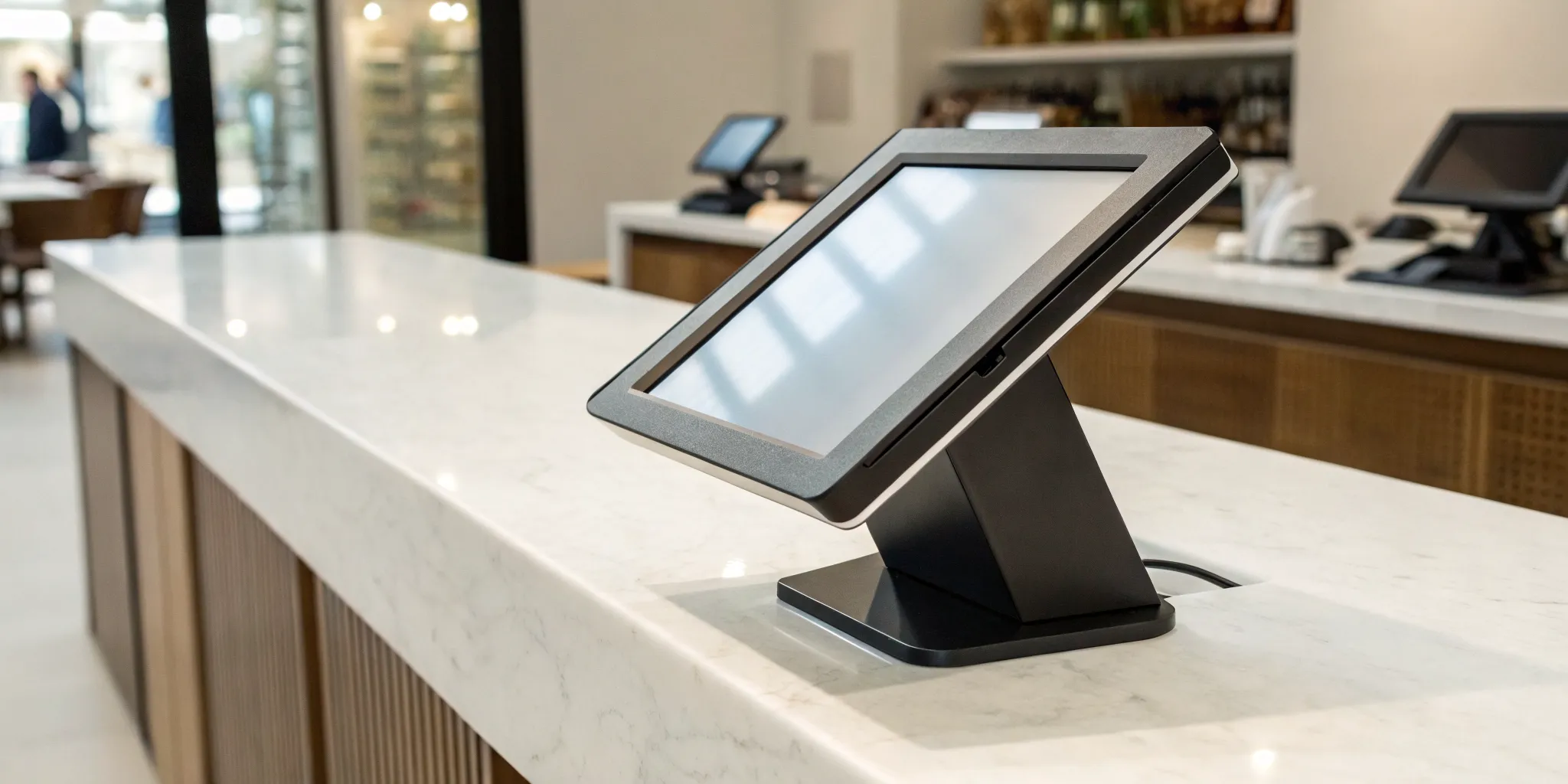
Think of countertop terminals as the reliable workhorse of the payment world. These are the sturdy, stationary devices you typically see at a retail checkout counter, salon reception desk, or medical office. They sit on your counter and connect directly to a power source and the internet via an ethernet cable or Wi-Fi. Because they’re built for a fixed location, they are incredibly durable and straightforward to use. Many modern countertop terminals are all-in-one machines that can process credit card payments, accept contactless taps, and print receipts, making the checkout process simple for both you and your customer.
Mobile card readers
If your business is always on the move, a mobile card reader is your new best friend. These compact, lightweight devices pair with your smartphone or tablet, turning the device in your pocket into a powerful payment processor. They are perfect for food trucks, craft market vendors, mobile groomers, and any entrepreneur who meets customers outside of a traditional storefront. Some services even offer Tap to Pay technology, which allows you to accept payments directly on your phone with no extra hardware required. This makes it one of the most affordable and flexible ways to start accepting card payments anywhere.
Wireless and portable terminals
Wireless terminals offer the best of both worlds: the robust features of a countertop machine with the flexibility of a mobile device. Unlike a simple card reader that relies on a phone, these are self-contained, handheld terminals with their own Wi-Fi or cellular connection. They are ideal for restaurants wanting to offer pay-at-the-table service, retailers looking to shorten lines by checking customers out anywhere in the store, or service providers who need a professional terminal on-site. This flexibility allows you to take payments securely in various environments without being tied to a specific spot.
Integrated POS system terminals
For businesses that need more than just a simple payment device, an integrated terminal is the way to go. These terminals are a key component of a larger Point of Sale (POS) system that acts as the central command center for your entire operation. Beyond processing transactions, a full POS system can help you manage inventory, track sales analytics, build customer profiles, and handle employee time clocks. While it’s a bigger investment upfront, integrating your payment terminal with a comprehensive POS system streamlines your daily tasks and provides valuable insights to help you run your business more effectively.
Virtual terminals and payment apps
What if you don’t need a physical machine at all? A virtual terminal turns your computer, tablet, or smartphone into a payment processing device through a secure web page or app. This is the perfect solution for businesses that take payments over the phone or through mail orders, as you can simply key in the customer’s card information to process a transaction. It requires no dedicated hardware, making it an extremely cost-effective and flexible option. It’s an excellent choice for service-based businesses, B2B companies, or anyone who needs to process card-not-present payments securely and easily from their office.
What Key Features Should You Look For?
Once you know which type of terminal fits your business, it’s time to compare the features. Modern payment terminals do a lot more than just swipe cards. The right features can speed up your checkout line, protect your business from fraud, and even give you valuable insights into your sales. Think of this as your checklist for finding a machine that will work as hard as you do.
Choosing a terminal isn’t just about what it can do today; it’s about what it can help your business do tomorrow. Look for a device that supports your current needs while giving you room to grow. From accepting the latest payment methods to integrating with your other business tools, these key features are what separate a basic card reader from a true business asset. Let’s walk through the must-haves.
Tap-to-pay and contactless support
In a world of digital wallets and tap-and-go cards, speed is everything. Customers expect to be able to pay quickly and without friction. That’s why your terminal absolutely must support contactless payments. This includes NFC (Near Field Communication) technology that allows customers to tap their credit cards, debit cards, or smartphones to pay.
This isn’t just a convenience; it’s a core part of the modern customer experience. A terminal that can accept contactless payments from devices like Apple Pay and Google Pay shows your customers that you’re up-to-date. It keeps your lines moving and reduces physical contact, which many people still appreciate. If a terminal doesn’t have this feature, it’s already behind the times.
Security and PCI compliance
This is the single most important feature on the list. Protecting your customers’ payment information is not optional, it’s a fundamental responsibility. Your payment terminal must be PCI compliant, which means it meets the Payment Card Industry Data Security Standard. This set of rules is designed to ensure that all companies that process, store, or transmit credit card information maintain a secure environment.
A secure terminal uses technologies like end-to-end encryption to scramble card data the moment it’s captured. This makes the information unreadable to fraudsters. Your payment processor, like MBNCard, ensures the terminals they provide meet these strict security standards, helping you avoid hefty fines and protect your reputation. Never compromise on security.
Integration with your other software
Your payment terminal shouldn’t be a lonely island. For maximum efficiency, it needs to communicate with the other software you use to run your business. Look for a terminal that integrates smoothly with your main sales system (POS), inventory management platform, and accounting software.
When your systems are connected, you eliminate the need for manual data entry, which saves time and reduces the risk of human error. For example, when a sale is made on an integrated terminal, the transaction details are automatically sent to your POS, which then updates your inventory levels and sales reports. This creates a seamless workflow that lets you focus on your customers instead of your paperwork.
Connectivity options (Wi-Fi, cellular, etc.)
How your terminal connects to the internet can have a big impact on your daily operations. Most modern terminals offer a few options. Wi-Fi is great for brick-and-mortar stores, cafes, and restaurants with a reliable wireless network. An Ethernet connection, which plugs directly into your internet router, offers the most stable and fastest connection.
If your business is mobile, like a food truck, a market stall, or a service that visits clients’ homes, a terminal with cellular connectivity is essential. These devices have a SIM card, just like a smartphone, and can process payments anywhere you have a cell signal. Some terminals even offer multiple connection types, providing a backup if one fails.
Offline payment capabilities
What happens when your internet goes down during a busy sales day? If your terminal has an offline mode, you can keep ringing up sales. This feature allows the device to securely store transaction information when it can’t connect to the internet. Once your connection is restored, the terminal automatically processes the saved payments.
This is a lifesaver for any business that can’t afford downtime. While there are some risks involved since the card isn’t authorized in real-time, having the ability to accept offline payments is a powerful backup plan. It ensures you never have to turn a customer away just because your Wi-Fi is acting up.
Reporting and analytics tools
A great payment terminal does more than just process transactions; it gives you the data you need to make smarter business decisions. Look for a device that comes with robust reporting and analytics tools. At a minimum, you should be able to easily view your daily sales totals, search for specific transactions, and process refunds.
More advanced systems offer deeper insights. You can track sales trends over time, identify your busiest hours, and see which products are your bestsellers. This information is gold for managing inventory, scheduling staff, and planning promotions. When your terminal helps you understand your business better, it becomes a true partner in your growth.
How Much Does a Payment Terminal Cost?
Figuring out the cost of a payment terminal isn’t just about the sticker price. While the hardware itself is a one-time purchase, it’s part of a larger ecosystem of processing fees and service charges that will affect your bottom line for years to come. The upfront cost for a machine can vary widely. For example, a popular all-in-one device like the Square Terminal costs $299, while other standard countertop models can range from about $220 to nearly $800 depending on their features.
The price you pay for the physical device is just the beginning. To make the best decision for your business, you need to look at the total cost of ownership. This includes how you acquire the terminal, the fees you’ll pay for each transaction, and any recurring monthly charges. It’s easy to get drawn in by offers for “free” equipment, but these deals often come with inflated processing rates that cost you far more in the long run. Understanding the complete picture empowers you to choose a solution that truly supports your business’s growth instead of chipping away at your profits. Let’s break down what you can expect to pay at every step.
Should you buy, lease, or rent?
When you get a new payment terminal, you have three main options: buying it outright, leasing it long-term, or renting it short-term. Buying your equipment means you own it forever. This involves a higher upfront cost, but it’s usually the most cost-effective choice in the long run, saving you from endless monthly payments.
Leasing, on the other hand, involves a long-term contract with a monthly fee. While it lowers the initial expense, leasing almost always costs you more over the life of the contract and can lock you into a single provider. Renting is a great flexible option for temporary needs, like a pop-up shop or a seasonal event. Some suppliers can even ship it out the same day if you’re in a pinch.
Understanding transaction and processing fees
The most significant ongoing cost of accepting card payments is the transaction fee, often called the Merchant Discount Rate (MDR). This is a percentage of each sale that you pay to the processor. These rates are not set in stone; they are agreed upon when you sign up for your merchant account and can differ based on the card type, how the card is processed, and your specific pricing plan.
It’s easy to focus only on the hardware, but the transaction fees will have a much bigger impact on your bottom line over time. A “free” terminal from a provider might come with inflated processing rates that cost you thousands more in the long run. Always read the fine print on your merchant agreement.
What to expect for monthly fees
Beyond the per-transaction percentage, you’ll likely encounter some fixed monthly fees. These can include a statement fee, a payment gateway fee for online transactions, and a PCI compliance fee to ensure you’re meeting security standards. Some providers also bundle customer support or other services into a monthly package.
Additionally, you might see charges for optional services. For instance, if you don’t want to wait the standard two to three business days for your money, many processors offer an expedited funding service. This allows you to get their money faster, often on the same day, for an additional fee, which is typically a small percentage of the settlement amount. When comparing providers, be sure to ask for a complete list of all potential monthly fees.
Watch out for these hidden fees
Unfortunately, the payment processing industry has a reputation for confusing statements and hidden fees. One of the most important things to watch out for is an early termination fee (ETF). If you’ve signed a long-term lease or contract, you could face a hefty penalty for switching providers before the term is up. Another surprise can come from how different payment types are processed. For example, a customer paying with a credit card through a UPI app might trigger MDR charges you weren’t expecting.
Finally, while payment terminals are designed to keep card data safe through encryption, failing to maintain your security compliance can result in PCI non-compliance fees. These monthly penalties can add up quickly. Working with a transparent partner like MBNCard helps you avoid these surprises.
An Overview of Common Terminal Brands
When you start looking at payment terminals, you’ll quickly notice a few brand names popping up again and again. Choosing the right hardware is a bigger decision than it might seem. The terminal you place on your counter is a key part of your customer’s experience, the tool your staff uses dozens of times a day, and a device that needs to work flawlessly with your payment processor. Some brands are known for their rock-solid reliability in high-volume retail, while others are praised for their sleek, modern designs perfect for a boutique or café. Understanding the key players in the market can help you narrow down your options and find a terminal that feels right for your business.
Think of these brands as the different car manufacturers of the payment world. You have the long-standing, trusted names that have been industry standards for decades, and you have newer innovators changing the game with integrated software. As a payment solutions provider, our job at MBNCard is to help you find the perfect model for your needs, no matter the brand. We’ll make sure it’s equipped with the right features and programmed to support cost-saving programs like dual pricing. This is a critical step, as not all terminals can support these programs, and the right hardware choice can directly impact your bottom line. Let’s look at some of the most common brands you’ll encounter.
MBNCard
You might be wondering where we fit in. MBNCard is a payment solutions provider, not a terminal manufacturer. This means we don’t create our own hardware. Instead, we partner with the industry’s best brands, including many on this list, to offer you a curated selection of top-tier terminals. Our expertise lies in helping you choose the right device for your specific business needs and then programming it to work seamlessly with your operations. We ensure your terminal is fully equipped to handle programs like dual pricing or cash discounts, helping you save significantly on processing fees. We handle the tech so you can focus on what you do best: running your business.
Verifone
If you’ve paid with a card in the last few decades, you’ve likely used a Verifone machine. Founded back in 1981, Verifone quickly became a leader in the industry and helped set the standard for what a modern payment terminal could do. The company has a massive global presence and has built a strong reputation for creating innovative and reliable technology. Businesses often turn to Verifone for its durable hardware that can handle a high volume of transactions, making it a common sight in busy retail stores and restaurants. Their devices are known for their security features and long-lasting performance, offering peace of mind for merchants.
Ingenico
Ingenico is another major player you’ll see everywhere, especially across Europe and other global markets. Established in 1980, Ingenico is recognized for offering a comprehensive range of products that serve just about every payment need imaginable. From simple countertop devices to sophisticated, multimedia POS systems, the company provides a wide variety of solutions. This makes them a versatile choice for businesses of all sizes. Whether you need a straightforward terminal for your front counter or a portable device for pay-at-the-table service, Ingenico likely has a secure and efficient option that fits the bill.
PAX Technology
PAX Technology has quickly grown to become one of the top three global makers of payment terminals, standing alongside giants like Verifone and Ingenico. The company is known for its focus on advanced, user-friendly technology. Many merchants appreciate PAX terminals for their modern, often Android-based operating systems, which can feel as intuitive to use as a smartphone. Their devices are designed to support a wide array of payment methods, from traditional magstripe cards to the latest in contactless and mobile wallet payments. This forward-thinking approach makes PAX a popular choice for businesses that want to stay on the cutting edge of payment tech.
Dejavoo
While perhaps not as widely known as Verifone or Ingenico, Dejavoo is a notable brand that has carved out a strong position in the payment terminal market. They offer a variety of credit card machines designed to meet different business needs, from countertop models to wireless solutions. Dejavoo terminals are often praised for their reliability and ease of use, making them a solid, no-fuss choice for small and mid-sized businesses. If you’re looking for a dependable workhorse that gets the job done without a steep learning curve, Dejavoo’s lineup is definitely worth exploring for its straightforward and effective solutions.
Square
You’ve probably seen Square’s iconic white readers and terminals in small businesses everywhere. The Square Terminal is a compact, all-in-one machine designed for taking card payments and printing receipts, making it especially popular among new or mobile businesses. Square’s biggest draw is its simplicity and tightly integrated ecosystem. The hardware is designed to work exclusively with Square’s payment processing and software. While this creates a very user-friendly experience, it also means you can’t switch payment providers without buying new hardware. It’s a great option for those who value convenience and an all-in-one system above flexibility and customization.
How Do Pricing Programs Affect Your Terminal Choice?
Choosing a payment terminal isn’t just about swiping cards; it’s a strategic decision that ties directly into how you manage your processing fees. The pricing program you use, like a cash discount or dual pricing model, can significantly influence which machine is right for you. For example, dual pricing lets you offer two prices: a standard price for card payments and a lower price for customers who pay with cash. This approach can help you offset credit card processing fees, but it only works if your terminal is equipped to handle it. Think of your terminal and your pricing program as two parts of the same machine. If they don’t fit together, the whole system breaks down.
Not all hardware is created equal. Some terminals come ready to support these kinds of cost-saving programs, while others might need special software or simply aren’t compatible. As experts at PaymentSource note, merchants can save on fees by incentivizing cash payments, a process made simple by terminals that support dual pricing. According to NerdWallet, it’s important to remember that some terminals are specifically designed for these programs. Before you commit to a piece of hardware, confirm it aligns with your pricing strategy. This ensures you’re not just getting a machine that accepts payments, but one that actively helps you save money.
How dual pricing works with your hardware
So, how does a terminal actually handle dual pricing? It’s all in the programming. To implement this model effectively, your payment terminal must be set up to distinguish between cash and card payments. When a customer pays with a card, the terminal automatically applies the standard price. When they pay with cash, it reflects the discounted cash price. This isn’t something you can just toggle on with any old machine. As Square explains, your terminal needs to be programmed to recognize these different transaction types. This automation is key because it removes the chance of human error and keeps your checkout process smooth and compliant.
Cut processing costs with the right terminal
Ultimately, the goal is to reduce your overhead, and your payment terminal is a powerful tool for doing just that. By selecting a terminal that supports programs like dual pricing, you can directly lower your monthly processing expenses. While a basic terminal might seem cheaper upfront, it could cost you more in the long run through higher fees. As Forbes highlights, investing in a more advanced terminal can lead to significant long-term savings by reducing processing fees. Think of it as an investment in your bottom line. The right hardware gives you the flexibility to adopt cost-effective pricing strategies, putting more money back into your business where it belongs.
Which Payment Terminal Is Right for Your Business?
Choosing a payment terminal isn’t a one-size-fits-all decision. The best hardware for your business depends entirely on how and where you interact with your customers. A bustling coffee shop has different needs than a freelance plumber or an online boutique. Think of it as picking the right tool for the job. You wouldn’t use a hammer to turn a screw, and you shouldn’t use a bulky countertop terminal if you’re making sales on the go. This guide will help you match your business type with the payment technology that will help you run things smoothly, keep customers happy, and get you paid securely.
For retail stores
If you run a brick-and-mortar shop, your checkout counter is your command center. You need a terminal that is fast, reliable, and easy for both your staff and customers to use. Countertop terminals are the classic choice for a reason. Modern all-in-one devices, like the Square Terminal, combine a card reader, touchscreen, and receipt printer into one compact unit. This keeps your counter organized and streamlines the checkout process. For most retail stores, a durable countertop model that supports tap-to-pay, chip cards, and mobile wallets is the perfect foundation for processing payments efficiently, sale after sale.
For restaurants and hospitality
In the fast-paced world of restaurants and hospitality, speed and convenience are everything. Taking payment at the table is no longer a luxury; it’s an expectation that improves security and speeds up table turnover. Wireless, portable terminals are essential. They allow your servers to take payments, split checks, and accept tips right at the customer’s side, reducing the risk of forgotten cards. Newer technologies even allow you to accept payments with just a smartphone, turning a standard iPhone into a secure payment device. This flexibility means less waiting for customers and more efficient service from your team.
For mobile and service-based businesses
If your business operates on the move, you need a payment solution that can keep up. Plumbers, electricians, market vendors, and personal trainers all need a way to accept card payments anywhere. Mobile card readers that connect to your smartphone or tablet via Bluetooth are a fantastic, low-cost option. For ultimate simplicity, Tap to Pay technology lets you turn your smartphone into a payment terminal with no extra hardware required. Customers can simply tap their contactless card or phone to yours. Look for a solution with long battery life and reliable connectivity so you never have to miss a sale, whether you’re at a client’s home or a busy outdoor market.
For e-commerce and hybrid businesses
When your business exists online, you don’t need a physical terminal for website sales; that’s handled by your payment gateway. However, if you also take orders over the phone or want to run an in-person pop-up shop, a virtual terminal is your best friend. A virtual terminal is a secure web page that lets you manually key in credit card information from any computer with an internet connection. For businesses that sell both online and in-person, an integrated system is key. This ensures that your inventory, sales data, and customer information are synced across all your channels, saving you from administrative headaches.
What’s Next in Payment Technology?
The world of payments is always moving, and keeping up can feel like a full-time job. But understanding where the industry is headed is key to future-proofing your business. The right technology not only protects your bottom line but also creates a smoother, more secure experience for your customers. It’s not about chasing every new trend, but about recognizing the shifts that will genuinely impact how you do business.
Looking ahead, three major developments are shaping the future of payment terminals and processing: biometric authentication, artificial intelligence, and the growing interest in cryptocurrency. Each of these technologies addresses core business needs in a new way, from tightening security to offering customers more flexibility in how they pay. Getting familiar with them now will put you in a great position to adapt and thrive as they become more common. Let’s look at what you can expect to see in the coming years.
Biometric payments
Imagine a customer paying with just a fingerprint or a quick facial scan. That’s the reality of biometric payments. This technology uses a person’s unique physical traits to authorize a transaction, making it one of the most secure payment methods available. It’s much harder to fake a fingerprint than it is to steal a PIN or a credit card number.
As people become more comfortable using biometrics to unlock their phones, they’re also becoming more open to using it for payments. This technology is growing fast, with the value of transactions using biometric authentication expected to climb into the trillions. For your business, this means faster checkouts, happier customers, and a significant reduction in the risk of fraud.
AI-powered fraud detection
Artificial intelligence is quietly working behind the scenes to make payments safer for everyone. Instead of relying on fixed rules, AI-powered systems learn what your normal transaction patterns look like. They can analyze massive amounts of data in real-time to spot unusual activity that might signal fraud.
This is a huge step up from older systems. AI is so effective that it can reduce false positives, meaning fewer legitimate transactions from your customers get mistakenly declined. This protects your revenue and prevents the frustrating experience of a customer’s card being rejected for no reason. It’s a smarter way to fight fraud that benefits both you and your customers by creating a more secure and seamless payment environment.
Cryptocurrency acceptance
While still an emerging area, accepting cryptocurrency is something more businesses are starting to consider. As digital currencies become more familiar, a growing number of consumers are showing interest in using them for everyday purchases. This isn’t just a niche trend; a recent global survey showed that a majority of consumers are curious about crypto payment options.
The good news is that you don’t have to be a crypto expert to offer this to your customers. Modern payment processors are beginning to handle the conversion for you, depositing US dollars into your account just like a regular card transaction. While it may not be right for every business just yet, the growing interest from both shoppers and merchants makes it a trend worth watching.
Related Articles
Frequently Asked questions
Can I use any terminal with any payment processor? Not always. Some hardware, like Square’s, is designed to work only with its own processing service. This creates a simple, all-in-one experience but locks you into their system and rates. Other terminals from brands like Verifone or PAX are more universal and can be programmed to work with various processors, including MBNCard. This gives you the freedom to shop for the best processing partner for your business without having to buy new equipment every time you switch.
What’s the real difference between a simple terminal and a full POS system? Think of it this way: a payment terminal’s main job is to securely accept payments. A Point of Sale (POS) system is the entire command center for your business. While a POS system includes a payment terminal, it also handles tasks like inventory management, sales reporting, customer relationship management, and employee scheduling. If you just need a reliable way to take cards, a standalone terminal is perfect. If you want to streamline your entire operation from one central hub, an integrated POS system is the better choice.
How can I be sure my terminal is protecting my customers’ data? This is a great question, and it’s the most important one to ask. A secure terminal should be PCI compliant and use end-to-end encryption, which scrambles card data from the moment it’s tapped, dipped, or swiped. The best way to ensure your security is to work with a reputable payment solutions provider. We make sure the hardware we offer meets the highest security standards, which protects your customers and saves you from the liability and fines that come with a data breach.
I’ve seen offers for “free” terminals. Is there a catch? Yes, there is almost always a catch. Companies that offer free hardware often make up for the cost by locking you into a long-term contract with higher-than-average processing fees. Over a few years, those inflated rates can cost you far more than the terminal itself would have. It’s usually more cost-effective to buy your equipment outright and partner with a transparent processor who offers competitive, easy-to-understand rates.
My business is new and small. What’s the most affordable way to start accepting cards? You have some great, low-cost options. A mobile card reader that pairs with your smartphone is an excellent starting point for businesses on the go. Even more affordable is Tap to Pay technology, which lets you accept contactless payments directly on your phone with no extra hardware needed. For businesses that take orders over the phone, a virtual terminal is the most cost-effective solution since it’s just a secure webpage and requires no physical device at all.