It’s easy to view a payment terminal as just another business expense—a necessary piece of hardware you have to buy. But the right terminal is an investment in your efficiency and growth. A modern machine does more than just process transactions; it can track inventory, manage customer data, and provide valuable sales reports that help you make smarter decisions. When you shift your focus from the upfront payment terminal machine price to its long-term value, you start asking better questions. This guide will show you how to evaluate a terminal not just on its cost, but on its potential to save you time and money.
Key Takeaways
- Look Beyond the Upfront Price Tag: The true cost of a payment terminal includes ongoing processing rates, monthly service charges, and potential contract fees. Always evaluate the total cost of ownership over time, not just the initial hardware price, to make the most financially sound decision.
- Match the Features to Your Daily Workflow: The best terminal is one that fits how you actually do business. Prioritize essential functions like EMV and contactless payment acceptance, and then consider whether you need portability for on-the-go sales or integrated software for inventory management.
- Own Your Hardware to Maintain Control and Save Money: Be cautious of “free” terminal offers, as they often lock you into expensive, long-term contracts with high fees. Buying your terminal outright is almost always cheaper in the long run and gives you the freedom to switch payment processors if you find a better deal.
What Are the Different Types of Payment Terminals?
When you start looking at payment terminals, you’ll quickly realize there isn’t a one-size-fits-all solution. The right machine for a bustling coffee shop is completely different from what a freelance photographer needs. Your choice depends on where you do business, how many transactions you handle, and what other management features you need. Think of it as choosing a vehicle: you wouldn’t buy a semi-truck to make grocery runs.
Understanding the main categories is the first step to finding the perfect fit for your business without overspending. Generally, terminals fall into three camps: small mobile readers that work with your phone, classic countertop machines that sit by the register, and fully integrated Point of Sale (POS) systems that act as your business command center. Each type comes with its own price tag and feature set, designed to solve different problems for different kinds of business owners. Let’s break down what makes each one unique.
Mobile Card Readers
If your business is always on the move, a mobile card reader is your new best friend. These are small, lightweight devices that connect to your smartphone or tablet, turning the device you already own into a payment processor. They’re perfect for food trucks, artists at craft fairs, plumbers making house calls, or any entrepreneur who meets customers outside of a traditional storefront.
The biggest draw is the low upfront cost, with most simple readers costing between $20 and $75. They’re incredibly easy to set up and use, allowing you to accept all major credit cards and digital wallets on the spot. While they don’t have the advanced inventory or reporting features of larger systems, they provide the essential function of getting you paid quickly and securely, wherever your work takes you.
Countertop Terminals
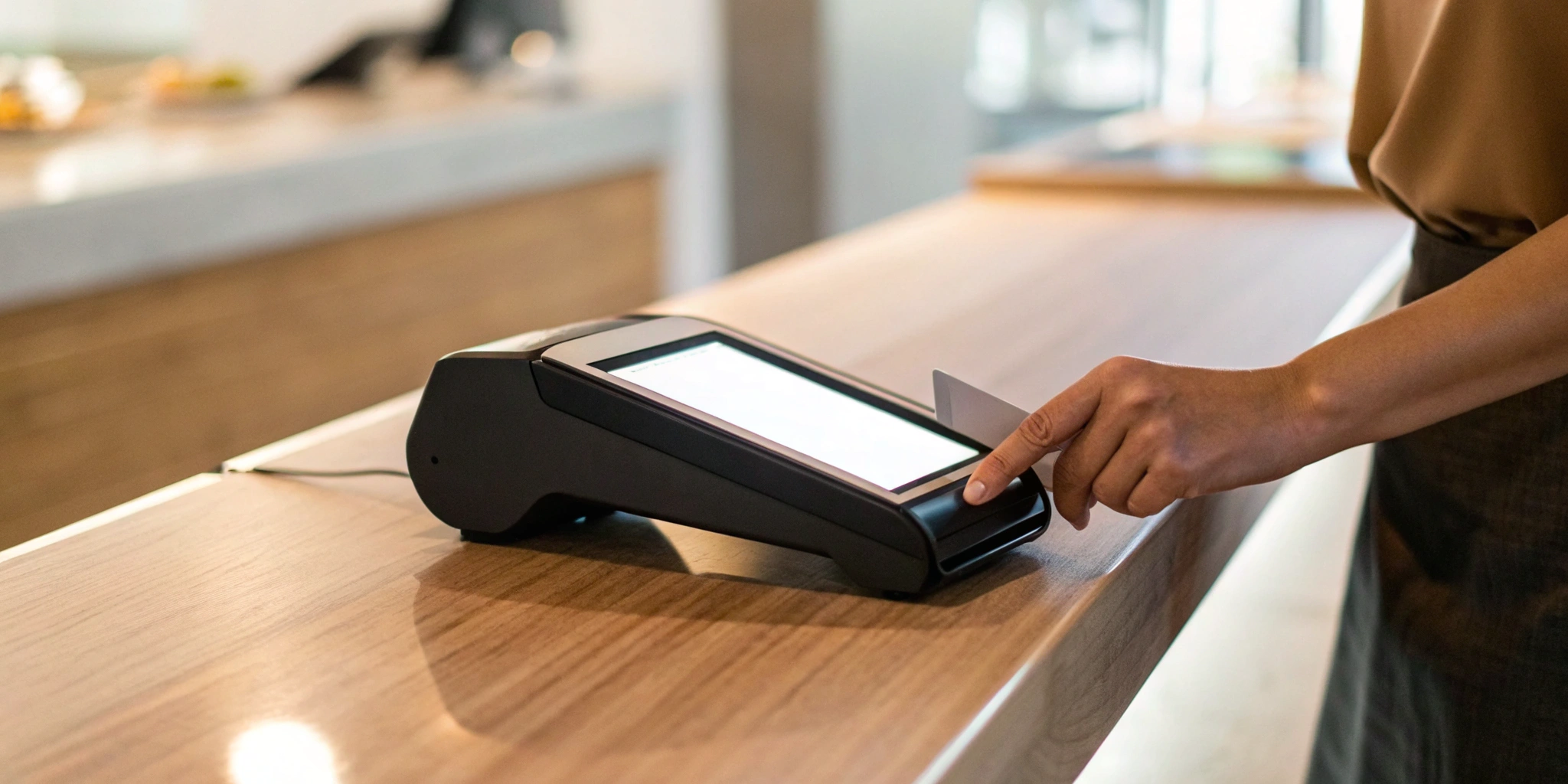
Countertop terminals are the reliable workhorses of the payment world. You’ve seen them thousands of times at retail stores, restaurants, and doctor’s offices. These sturdy machines are designed to live at a checkout counter, connected directly to a power source and your internet. They are built to handle a high volume of daily transactions without a hitch, making them ideal for any business with a fixed location.
Priced anywhere from $100 to $800, the cost varies based on features. Basic models handle simple swipes, dips, and taps, while more advanced versions include built-in printers and customer-facing touchscreens. These terminals are known for their speed and security, supporting EMV chip cards and NFC (contactless) payments to keep transactions safe and smooth for you and your customers.
Integrated POS Systems
An integrated Point of Sale (POS) system is much more than just a credit card machine—it’s the central hub of your entire business operation. These all-in-one systems combine powerful software with robust hardware, including a touchscreen display, cash drawer, scanner, and card reader. They not only process payments but also manage inventory, track sales data, handle employee time clocks, and run customer loyalty programs.
These systems are a bigger investment, typically ranging from $200 to over $1,800, but they can save you significant time and money in the long run. A full POS system is best for growing businesses like busy restaurants, boutiques, and salons that need to streamline their day-to-day tasks and gain deeper insights into their performance.
What Factors Influence Terminal Pricing?
When you start shopping for a payment terminal, you’ll quickly see that prices can be all over the map. The final cost isn’t just a number pulled out of thin air; it’s a reflection of the hardware, software, and support system you’re investing in. Understanding what goes into that price tag is the first step to finding the right fit for your business without overspending. Let’s break down the key factors that determine what you’ll pay.
Hardware Features and Capabilities
Think of buying a payment terminal like buying a new phone. A basic model that just makes calls is much cheaper than the latest smartphone with a high-res camera and tons of apps. The same logic applies here. A simple mobile card reader might only cost you $50, while a sophisticated, all-in-one system with a touchscreen, built-in receipt printer, and Wi-Fi can run several hundred dollars. The more features and capabilities a terminal has, the higher its upfront cost will be. So, it’s important to decide which features are must-haves and which are just nice-to-haves for your daily operations.
Brand Reputation and Support
You’re not just buying a piece of plastic and metal; you’re buying into a brand and its ecosystem. Established brands with a reputation for reliability and security often come with a higher price tag, and for good reason. A significant part of that cost is the customer support that comes with it. When your terminal goes down during a dinner rush, having access to responsive, helpful support is priceless. Some providers offer 24/7 customer support, giving you peace of mind that help is available whenever you need it. This is a huge value-add that’s often reflected in the price.
Your Processing Volume
How much you sell can directly impact your terminal costs. Some processors might offer you a “free” terminal to get your business, but it’s important to read the fine print. That free hardware is often paid for through higher transaction fees or a long-term contract you can’t easily get out of. On the other hand, if your business has a high sales volume, you may be able to negotiate for discounted hardware or lower transaction fees. Always look at the total cost over time, not just the initial price of the machine.
Security and Compliance Features
In the world of payments, security is everything. A modern terminal must be equipped with the latest security standards, like the ability to accept EMV chip cards, to protect you and your customers from fraud. This is non-negotiable. PCI compliance, a set of security standards for handling card data, is another critical factor. A terminal that helps you stay compliant might cost more upfront, but it saves you from the potentially massive costs of fines and data breaches down the road. Investing in a secure terminal is an investment in your business’s longevity and your customers’ trust.
Comparing Top Payment Terminal Brands and Costs
When you start shopping for a payment terminal, you’ll quickly notice a few big names pop up again and again. Each brand has its own approach to hardware, software, and pricing, which can make a direct comparison feel a little tricky. To help you sort through the options, let’s break down what some of the top payment terminal providers offer, from their key features to the costs you can expect. This will give you a clearer picture of which solution might be the right fit for your business.
MBNCard Payment Solutions
At MBNCard, we focus on providing transparent and affordable payment processing without the confusing statements and hidden fees that frustrate so many business owners. Our approach is built on reliability and partnership. We offer a straightforward monthly fee of $25 for our secure online payment processing, designed to integrate smoothly with your operations. This makes budgeting predictable and helps you keep more of your hard-earned revenue. We’re an ideal choice for small to mid-sized businesses that value personalized service and want a cost-effective solution they can count on for secure transactions and fast deposits.
Square Terminals
Square is known for its user-friendly interface and simple, flat-rate pricing, making it a go-to for startups and small businesses. They charge a consistent 2.6% + 10¢ for every tapped, dipped, or swiped transaction, which removes the guesswork from your processing costs. The initial hardware investment is also very low; their basic mobile card reader is often free or inexpensive, allowing you to start accepting payments almost immediately. Square’s range of point-of-sale (POS) systems is great for businesses on the go, like food trucks, market vendors, and independent service providers who need a straightforward and reliable way to process payments anywhere.
Clover Systems
Clover offers a suite of sleek, all-in-one POS systems that are highly customizable to fit specific business needs, particularly in retail and food service. Their hardware is more advanced than a simple card reader, with basic devices starting around $69, plus monthly fees for software plans and payment processing. The real strength of Clover is its app market, which allows you to add specialized tools for inventory management, customer loyalty programs, and more. This makes it a great option for growing businesses that want a powerful, customizable solution that can scale with them and serve as the central hub for their operations.
PayPal Here Devices
For businesses already using PayPal for their online sales, PayPal Here (now part of PayPal Zettle) offers a seamless way to unify in-person and online payments. Their mobile payment solution lets you accept cards using a smartphone or tablet. The card reader typically costs around $79, and PayPal charges a flat transaction fee of 2.7% for swiped or inserted card payments. This is an especially convenient option for merchants who want all their funds consolidated in one PayPal account, simplifying cash flow management. It’s perfect for mobile businesses, freelancers, and anyone who values the familiarity and trust associated with the PayPal brand.
Verifone Terminals
Verifone is one of the most established and recognized names in the payment terminal market, known for producing durable and highly secure hardware. Their devices are built to handle high transaction volumes, making them a staple in traditional retail and service environments. The cost for a Verifone terminal can range from $200 to over $1,000, depending on the model’s features. In addition to the hardware cost, you’ll have monthly service fees and transaction rates based on your merchant services agreement. Businesses looking for a robust, long-lasting countertop solution often turn to Verifone’s variety of devices for their proven reliability and security.
How Much Should You Expect to Pay for a Payment Terminal?
Figuring out the right price for a payment terminal can feel like a moving target, but it really comes down to what your business needs. You don’t need to overspend on a system with features you’ll never use, but you also don’t want to be held back by a device that can’t keep up. The cost of a terminal is directly tied to its capabilities, so let’s break down the typical price ranges you can expect to see. This will help you find that sweet spot between functionality and affordability.
Entry-Level Options: Under $100
If you’re just starting out, run a mobile business, or have a low transaction volume, you don’t need to invest a lot upfront. Entry-level options, primarily mobile card readers, usually cost between $0 and $100. These are compact devices that connect to your smartphone or tablet via Bluetooth, making them perfect for artisans at craft fairs, food truck owners, or service providers who work on-site. They handle the basics of accepting card payments without the complexity or cost of a larger system. While simple, they are a powerful and professional way to accept payments anywhere you do business.
Mid-Range Terminals: $100–$500
For most brick-and-mortar small businesses, the mid-range category is the perfect fit. These terminals, which include both countertop and wireless models, generally fall between $100 and $500. They are the reliable workhorses you see in cafes, retail shops, and salons. These devices are built to handle a steady stream of customers and can process all modern payment types, including traditional magstripe swipes, EMV chip cards, and NFC transactions like Apple Pay and Google Pay. The price within this range can vary, with simpler models starting around $220 and more advanced ones reaching closer to $800, depending on features like built-in printers and battery life.
Enterprise-Level Systems: $500+
When your business needs more than just a payment processor, you’ll want to look at enterprise-level systems, which typically start at $500 and can go well over $1,800. These are often all-in-one Point of Sale (POS) systems that combine payment processing with powerful business management software. Think of them as the command center for your operations. Beyond taking payments, they can help you manage your inventory, track sales analytics, and handle customer relationship management. While the initial investment is higher, the efficiency and data you gain can provide significant long-term savings and help you make smarter decisions as you grow.
Should You Buy or Rent Your Payment Terminal?
One of the first big decisions you’ll make when setting up your payment processing is whether to buy your terminal outright or rent it. This choice can have a real impact on your monthly expenses and long-term flexibility. There’s no single right answer for every business, but understanding the pros and cons of each path will help you find the best fit for your budget and goals.
Renting can seem attractive because it keeps your initial costs low, which is a huge help when you’re just starting out. On the other hand, buying your equipment means you own it free and clear. This gives you more freedom and almost always saves you money over time. We’ll walk through the specifics of each option, compare the costs, and look at some alternative financing models so you can make a confident, informed decision for your business.
The Case for Buying Your Terminal
In most situations, buying your payment terminal is the most financially sound choice. The biggest advantage is the long-term savings. While you have a higher upfront cost, you avoid the endless cycle of monthly rental fees that can add up to far more than the terminal’s actual value over a year or two. Once you buy it, it’s yours, and that recurring expense is gone for good.
Ownership also gives you freedom. You aren’t tied to a specific payment processor through a lengthy and restrictive lease agreement. If you find a provider with better rates or service down the line, you can switch without worrying about breaking a contract for your hardware. Owning your equipment simplifies your expenses and gives you full control over a critical business asset.
The Case for Renting Your Terminal
The main appeal of renting a terminal is the low barrier to entry. If your business is new or cash flow is tight, paying a small monthly fee instead of several hundred dollars upfront can be a lifesaver. Many rental or lease agreements also come with the perk of included maintenance, support, and even equipment upgrades. This means if your terminal stops working or becomes outdated, your provider will often repair or replace it for you.
However, it’s crucial to approach rentals with caution. Be wary of any company offering a “free” machine, as the cost is usually hidden in higher processing fees or a non-cancellable, multi-year contract. Always read the fine print to understand the total cost and commitment before you sign.
Comparing Costs Over Time
Let’s do some simple math. A reliable, modern payment terminal might cost you around $300 to purchase. A typical lease for the same device could be $30 per month. While $30 sounds manageable, after just 10 months, you will have already paid $300—the full price of the machine—but you still won’t own it. After two years, you’ll have spent $720 on a terminal you could have bought for less than half that price.
When you look at the total cost of ownership, buying nearly always comes out on top. Your initial investment pays for itself relatively quickly, and from that point on, you’ve eliminated a recurring monthly bill. This allows you to put more money back into growing your business.
Financing and Lease-to-Own Options
If buying a terminal upfront isn’t feasible but you want to avoid the long-term expense of renting, you have other options. Some providers offer installment plans that let you spread the purchase price over a few months. This gives you the benefits of ownership without the immediate financial hit. You’ll have a fixed number of payments, and once they’re done, the terminal is yours.
Another route is a lease-to-own agreement. This works like a lease, but a portion of your monthly payment goes toward the purchase price. It’s a good middle-ground solution, but be sure to calculate the total amount you’ll pay by the end of the term. It will likely be more than the original sticker price, but it can still be a better financial move than a standard rental.
What Hidden Costs Should You Watch For?
The sticker price of a payment terminal is just the beginning. To understand the true cost, you need to look at the entire fee structure that comes with it. Many providers hide extra charges in the fine print of their contracts, turning a seemingly good deal into a financial headache. Knowing what to look for ahead of time is the best way to protect your bottom line and partner with a processor who values transparency. Let’s break down the most common hidden costs you might encounter.
Processing Fees and Transaction Rates
This is the fee you’ll pay on every single sale. Most processors use a pricing model that combines a percentage of the transaction amount with a small, flat fee. For example, you might pay 2.9% + $0.30 for every transaction. These rates can vary widely, so it’s crucial to understand what you’re being charged. Be especially wary of offers for a “free” terminal. Often, the cost of the hardware is simply baked into higher, non-negotiable processing rates or a long-term contract you can’t get out of. Always read the agreement carefully to see how the hardware cost is being covered.
Monthly Service Charges
Beyond per-transaction fees, many providers charge a variety of monthly fees. These can include statement fees, gateway fees, or a general monthly service charge. Some companies might offer a lower transaction rate if you agree to a monthly subscription, which can be a good deal if your sales volume is high. However, you need to do the math. Calculate whether the savings on your transaction fees will actually outweigh the fixed monthly cost. A transparent provider will clearly itemize these charges on your statement so you know exactly what you’re paying for each month.
Setup and Activation Fees
Just when you think you’ve accounted for everything, you might get hit with a one-time setup or activation fee. While not all companies charge these, they can be an unwelcome surprise if you haven’t budgeted for them. This is another reason why it’s so important to review your merchant agreement before you sign. Ask your sales representative to walk you through all upfront costs required to get your new terminal up and running. A trustworthy partner will be upfront about any initial investment and won’t rush you through the paperwork.
PCI Compliance and Maintenance Costs
PCI compliance is a set of security standards designed to protect cardholder data, and it’s a requirement for any business that accepts credit cards. Many processors charge an annual or monthly fee to help you maintain your PCI compliance. If you fail to comply, you could face hefty non-compliance penalties. You should also ask about warranties and maintenance plans. An extended warranty might cost a little more upfront, but it can save you a fortune if your terminal needs repairs or replacement down the line. These ongoing costs are a critical part of your terminal’s total cost of ownership.
Which Terminal Features Should You Prioritize?
When you’re choosing a payment terminal, it’s easy to get overwhelmed by the options. The key is to focus on the features that will actually make a difference in your day-to-day operations. Think beyond the price tag and consider how a terminal’s capabilities align with your business model. A food truck has very different needs than a boutique with a fixed checkout counter. Prioritizing the right features ensures you’re investing in a tool that supports your workflow, secures your transactions, and helps you serve your customers better. Let’s look at the four essential areas you should evaluate.
EMV and NFC Compatibility
First and foremost, your terminal must be secure. EMV and NFC compatibility are the modern standards for payment security. EMV technology is what allows you to accept chip cards, which are far more secure than the old magnetic stripe cards. This significantly reduces your liability for fraudulent transactions. NFC, or Near Field Communication, is the technology behind contactless payments—think Apple Pay, Google Pay, or tapping a credit card. Offering these options isn’t just about convenience; it shows your customers that you take their security seriously. Any terminal you consider should have both EMV and NFC capabilities built-in. It’s a non-negotiable feature for protecting your business and building customer trust.
Connectivity Options (Wi-Fi, 4G, etc.)
How your terminal connects to the internet can make or break a sale. A slow or unreliable connection leads to long lines and frustrated customers. Your business environment will determine the best option for you. If you have a stable connection at a physical storefront, a terminal that connects via Wi-Fi or an Ethernet cable is a great choice. However, if you take payments on the go—at markets, in a client’s home, or on a food truck—you’ll need a terminal with a cellular (4G/5G) connection. Some terminals offer multiple connectivity options, giving you a reliable backup if your primary connection fails.
Battery Life and Portability
Your terminal should move with the flow of your business. For many owners, that means it can’t be permanently tethered to a power outlet. If you run a restaurant and want to accept payments tableside, or if you’re a contractor who needs to close out an invoice on-site, portability is essential. Look for a lightweight terminal with a long-lasting battery that can get you through a full business day on a single charge. A portable credit card machine gives you the flexibility to complete transactions anywhere, improving the customer experience and making your checkout process much more efficient. Don’t underestimate the freedom that a reliable, portable device provides.
Built-in Business Management Tools
Modern payment terminals are much more than simple card readers; they’re powerful business hubs. These “smart terminals” come with software that can help you run your entire operation more smoothly. Imagine tracking inventory, managing employee timeclocks, viewing sales reports, and building customer profiles all from one device. While these all-in-one devices may have a higher initial cost, they often save you money over time by eliminating the need for separate software subscriptions. By consolidating these tools, you can streamline your workflow, get deeper insights into your business performance, and spend less time on administrative tasks.
Common Myths About Payment Terminal Costs
When you’re shopping for a payment terminal, it’s easy to get tripped up by common misconceptions. The payment processing industry can feel complex, and some providers take advantage of that confusion. Let’s clear the air and look at some of the biggest myths about terminal costs. Understanding these will help you ask the right questions and find a solution that truly fits your business without any surprise expenses down the road. By knowing what to watch for, you can confidently choose a partner who values transparency as much as you do.
The “Free Terminal” Myth
We’ve all seen the ads: “Get a FREE credit card terminal when you sign up!” It sounds like an unbeatable deal, but it’s one of the most common traps for business owners. Providers aren’t in the business of giving away expensive hardware for nothing. That “free” terminal is often paid for through higher processing rates, long-term contracts with steep cancellation penalties, or other hidden fees. Before you agree to anything, you need to read the contract very carefully. A seemingly free device could lock you into an expensive agreement that costs you far more over time than simply buying the hardware outright.
The “One-Time Cost” Assumption
Another frequent mistake is thinking the price of the terminal is the only hardware expense you’ll have. The reality is that the sticker price is just one piece of the puzzle. The total cost of accepting payments involves much more than the machine itself. You also have to account for software subscriptions, setup fees, and ongoing transactional fees that are charged every time a customer pays with a card. Think of it less like buying a calculator and more like getting a cell phone—the device is just the beginning, and the service plan is where the real costs lie.
The Belief in Uniform Pricing
It’s easy to assume that most payment terminals cost about the same, but prices can vary dramatically. You can find basic PIN pads for a couple of hundred dollars, while high-end, all-in-one POS systems can cost nearly a thousand dollars or more. The price depends on the brand, features, and technology packed into the device. For example, a simple terminal that only swipes cards will be much cheaper than one with a touchscreen, built-in printer, and inventory management software. This is why it’s so important to compare different credit card machines before making a decision.
Unrealistic Transaction Fee Expectations
Many business owners focus so much on the upfront cost of the terminal that they overlook the much larger, long-term impact of transaction fees. These are the small charges you pay on every single sale, and they add up fast. A provider might offer a cheap terminal to get you in the door, only to charge you higher-than-average processing rates that eat into your profits month after month. Always ask for a detailed breakdown of all fees—including interchange, assessments, and the processor’s markup—to understand the true cost of every swipe, dip, or tap.
How Can You Find Promotions and Discounts?
Everyone loves a good deal, and thankfully, the payment processing industry is full of them if you know where to look. Finding the right terminal at the right price is all about timing, negotiation, and a little bit of research. Instead of just accepting the first quote you receive, you can be proactive and find ways to lower your initial investment.
Providers are always competing for your business, which puts you in a great position to find promotions. Whether it’s a holiday sale, a special offer for new customers, or a discount for buying in bulk, there are plenty of opportunities to save. Let’s walk through the most common ways you can find a great price on your next payment terminal.
Seasonal Sales and Special Offers
Just like with retail shopping, timing your purchase can make a big difference. Many providers run special promotions around major holidays like Black Friday or at the end of the financial year. During these periods, you might find that many credit card machines are on sale, sometimes with significant price reductions on everything from simple PIN pads to high-end terminals.
To catch these deals, I recommend subscribing to newsletters from a few payment processors you’re interested in. This way, you’ll be the first to know when a sale is coming up. It’s a simple step that can save you hundreds of dollars on hardware, letting you invest that money back into other areas of your business.
Volume Discounts for Multiple Terminals
If your business needs more than one payment terminal—say, for multiple checkout counters or for servers to take payments tableside—always ask about volume discounts. Many providers are happy to offer a lower price per unit when you buy in bulk. This isn’t always advertised upfront, so don’t be shy about bringing it up during the sales conversation.
This principle can also apply to your processing fees. Some companies offer lower transaction fees if your business has a high sales volume, so bundling your hardware purchase with your processing agreement can unlock extra savings. When you’re getting a quote, make it clear how many terminals you need and ask what kind of package deal they can put together for you.
New Customer Incentives
The offer of a “free” terminal can be incredibly tempting, especially when you’re just starting out. Payment processors use these incentives to attract new merchants, but it’s essential to approach them with a healthy dose of skepticism. As the old saying goes, there’s no such thing as a free lunch.
Often, these “free” machine offers are tied to long-term contracts with high termination fees or inflated processing rates that make up for the initial discount. Before you sign anything, read the contract very carefully and ask for a full breakdown of all fees. A discounted terminal can be a great deal, but only if the long-term costs don’t outweigh the upfront savings.
How to Choose the Right Payment Terminal for Your Budget
Finding the right payment terminal often feels like a balancing act between features and price. While it’s tempting to just go for the cheapest option, the terminal with the lowest sticker price isn’t always the most budget-friendly in the long run. A smarter approach is to think of your terminal as an investment in your business operations. The right machine can streamline your checkout process, help you manage inventory, and provide valuable sales data—all of which contribute to your bottom line.
Making a smart choice comes down to a simple, three-step process. First, you need a clear picture of what your business actually requires from a terminal. Second, you have to look beyond the hardware price and understand the total cost of ownership, including all the associated fees. Finally, you should weigh the long-term value a terminal offers, considering how its features can support your business as it grows. By walking through these steps, you can confidently select a terminal that not only fits your budget today but also serves your business well into the future.
Assess Your Business Needs
Before you even look at prices, take a moment to map out your daily operations. The goal is to figure out which features your business truly needs and which ones are just nice to have. Start by asking yourself a few key questions. Do you need a portable terminal for tableside payments, pop-up events, or service calls? What types of payments do you need to accept—EMV chips, contactless payments like Apple Pay, or magstripes? Do you need advanced functions like inventory tracking, employee management, or detailed sales reporting? Listing your must-haves will help you narrow down your options and avoid paying for capabilities you’ll never use.
Compare the Total Cost of Ownership
The price tag on a terminal is only one piece of the puzzle. The total cost of ownership includes the hardware, transaction fees, and any other monthly or incidental charges. Hardware costs can range from under $100 for a simple reader to over $1,000 for a full POS system. Be cautious of “free terminal” offers—they often come with lengthy contracts and higher payment processing fees that cost you more over time. Always ask for a complete breakdown of costs, including per-transaction rates, monthly service charges, and any setup fees, so you can accurately compare your options without any surprises.
Evaluate the Long-Term Value
A slightly more expensive terminal can sometimes be the better financial choice if its features save you time and money down the road. For example, a smart terminal with built-in inventory management might cost more upfront, but it can prevent stockouts and reduce manual data entry. The best terminal for your business depends entirely on your specific needs. A coffee shop with high transaction volume has different requirements than a boutique clothing store. Consider how a terminal’s features can support your growth. Investing in a system that offers robust business management tools can provide a much greater return than simply choosing the cheapest device available.
Related Articles
Frequently Asked Questions
Is it better to start with a cheap mobile reader and upgrade later? That’s a common strategy, and it can work well if your initial budget is tight. A mobile reader is a great way to start accepting payments professionally without a big investment. However, think about where you see your business in a year or two. If you anticipate needing features like inventory management or detailed sales reports, it might be more cost-effective to invest in a more capable system from the start. Switching systems later can be disruptive, so it’s worth considering a terminal that can grow with you.
Can I use a terminal I already own with a new payment processor? Sometimes, but not always. Many payment terminals are programmed to work exclusively with the processor that sold them, meaning they are “locked.” If you own your hardware outright and it’s an unlocked model, you can often have it reprogrammed to work with a new provider. Before you switch processors, always ask if your current hardware is compatible. This simple question can save you from having to buy a brand-new machine.
Besides the hardware, what’s the biggest ongoing cost I should plan for? Your transaction fees will almost always be your largest and most consistent expense. While the upfront cost of the terminal is a one-time purchase, processing fees are charged on every single sale you make. This is why it’s so important to look beyond the hardware price and find a processor with a transparent and fair rate structure. A slightly more expensive terminal paired with lower
How do I know if an all-in-one POS system is worth the higher price? An all-in-one POS system is a smart investment when your business needs to manage more than just payments. Ask yourself if you spend a lot of time on tasks like tracking inventory, managing employee schedules, or running customer loyalty programs. If the answer is yes, a POS system can save you significant time and money by consolidating all those functions into one place. If you primarily just need to accept cards, a simpler countertop or mobile terminal is likely all you need.
What’s the most critical security feature I should look for in a terminal? Your terminal absolutely must be able to accept EMV chip cards. This is non-negotiable. Not only is it the modern standard for preventing fraud, but it also protects your business. When you process a chip card through an EMV-enabled terminal, the liability for any fraudulent transaction shifts from you to the card-issuing bank. Without this capability, you could be held financially responsible for counterfeit card fraud, which is a risk no small business should have to take.